
Cyprus Ranks Last in the EU for Public Transport Use
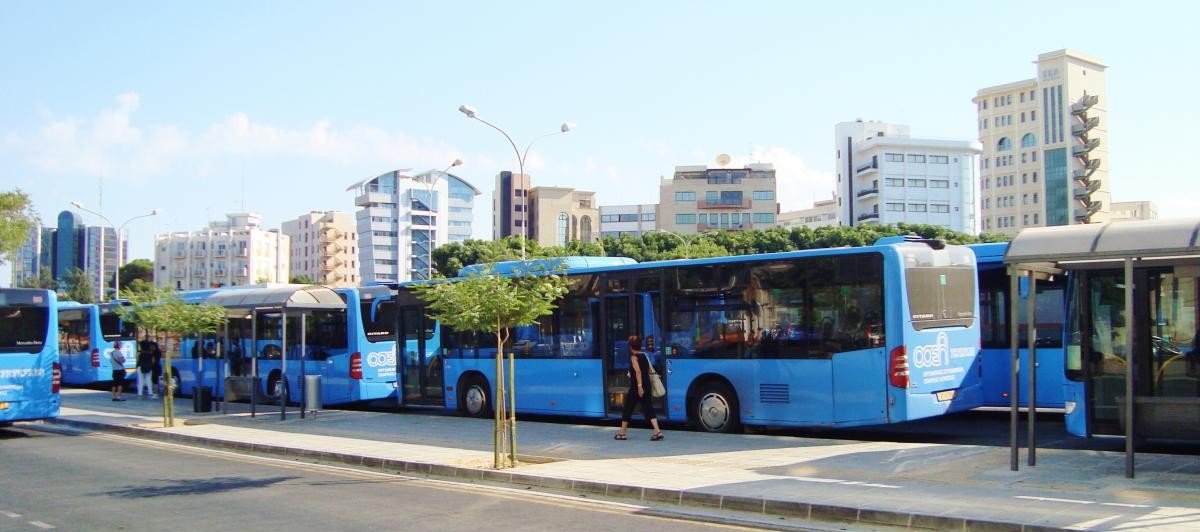
The statistical bureau Eurostat published new data on the transport habits of residents of Europe. The results were disappointing for Cyprus. According to statistics for 2024, the island recorded the lowest level of public transport use among all countries of the European Union.
The study shows that about 85% of residents of Cyprus aged 16 and over practically do not use buses or other types of public transport. This figure significantly exceeds the average level across the European Union and makes Cyprus the absolute outsider in EU transport statistics.
How residents of Europe use public transport
According to Eurostat, on average across the European Union public transport remains an important part of everyday mobility. In 2024, about 10.7% of Europeans over the age of 16 used buses, trains or the metro daily. Another 11.6% did so every week, about 10% — several times a month, and 17.1% used transport less than once a month.
At the same time, about half of the EU population — approximately 50.6% — did not use public transport at all. However, in Cyprus this figure is significantly higher and reaches 85%, demonstrating a serious dependence of the population on private cars.
Comparison with other EU countries
After Cyprus in the list of countries with the lowest use of public transport come Italy, where about 68% of residents do not use public transport, as well as Portugal with a figure of almost 68%. A high level of refusal to use public transport is also noted in France, Slovenia and Greece.
A completely different situation is observed in the countries of Northern and Central Europe. For example, in Luxembourg only about 15.7% of residents do not use public transport. A high level of usage is also recorded in Estonia and Sweden, where the share of people not using transport remains significantly below the European average.
Why buses are rarely used in Cyprus
Experts note that Cyprus traditionally has a high level of dependence on private cars. This is associated with the historically weak development of railway infrastructure, a limited public transport network, and the specifics of urban planning. In addition, many residents of the island prefer personal transport because of the convenience and flexibility of movement.
In recent years, the authorities of Cyprus have been trying to change the situation. The state is investing in the modernization of the bus network and the development of environmentally friendly types of transport. In particular, the operator Cyprus Public Transport is gradually renewing the bus fleet and introducing digital services for passengers.
The future of public transport on the island
The government of Cyprus considers the development of public transport an important part of the strategy for sustainable mobility and the fight against road congestion. In cities, new projects are being discussed, including increasing the number of bus routes and introducing more environmentally friendly transport solutions.
Nevertheless, Eurostat statistics show that the path to changing the transport habits of the island’s residents may be long. For now, most Cypriots still prefer to travel by their own cars, which makes Cyprus a unique example of the highest dependence on private transport among the countries of the European Union.
A wide selection of cars on the portal DOMCar.