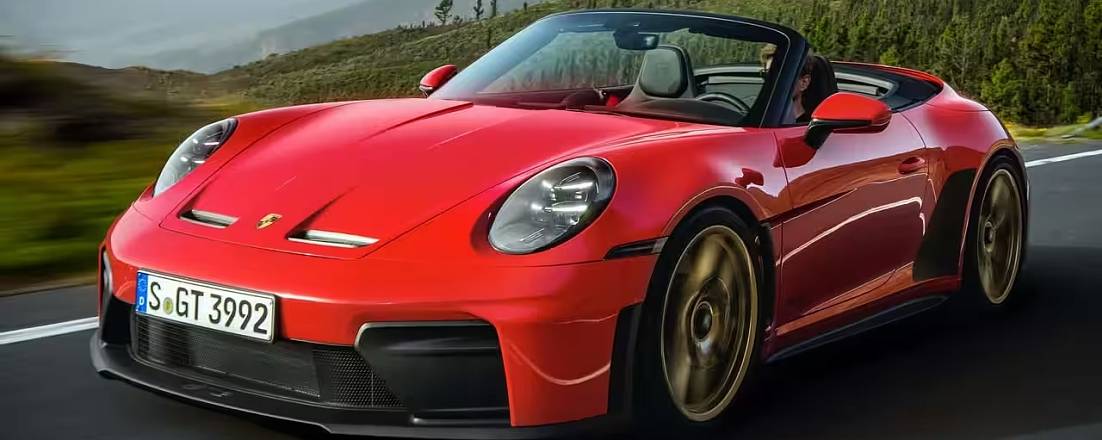
A landmark event has taken place in the automotive world. The German brand Porsche has, for the first time in the history of the 911 model, introduced a production convertible within the GT3 racing lineup. The new model is named Porsche 911 GT3 S/C and has become a natural response to enthusiasts who have spent years waiting for the chance to enjoy the unique sound of a high-revving flat-six engine without a fixed roof overhead.
Unlike the extremely rare previous-generation Speedster, which was a limited-run model with a manually operated soft top, the new S/C features a fully automatic mechanism, making it suitable for everyday use.
Technical heart: naturally aspirated brilliance
Under the hood lies an engine that excites even the most discerning enthusiasts. It is a 4.0-liter naturally aspirated flat-six. Engineers have extracted 375 kilowatts (equivalent to 510 horsepower) and peak torque of 450 Newton-meters from it.
However, the engine’s true highlight is not just its power figures, but its character. The unit can rev up to an astonishing 9,000 rpm, producing the signature melodic roar that enthusiasts are willing to pay a premium for. It is paired exclusively with a six-speed manual transmission — a tribute to tradition and purists who reject automated gearboxes.
Performance and handling: no compromises
Despite the absence of a fixed roof, the convertible matches the coupe in performance. Acceleration from 0 to 100 km/h takes just 3.9 seconds, while the top speed reaches 313 km/h. To achieve this performance despite the added weight, Porsche engineers implemented significant innovations.
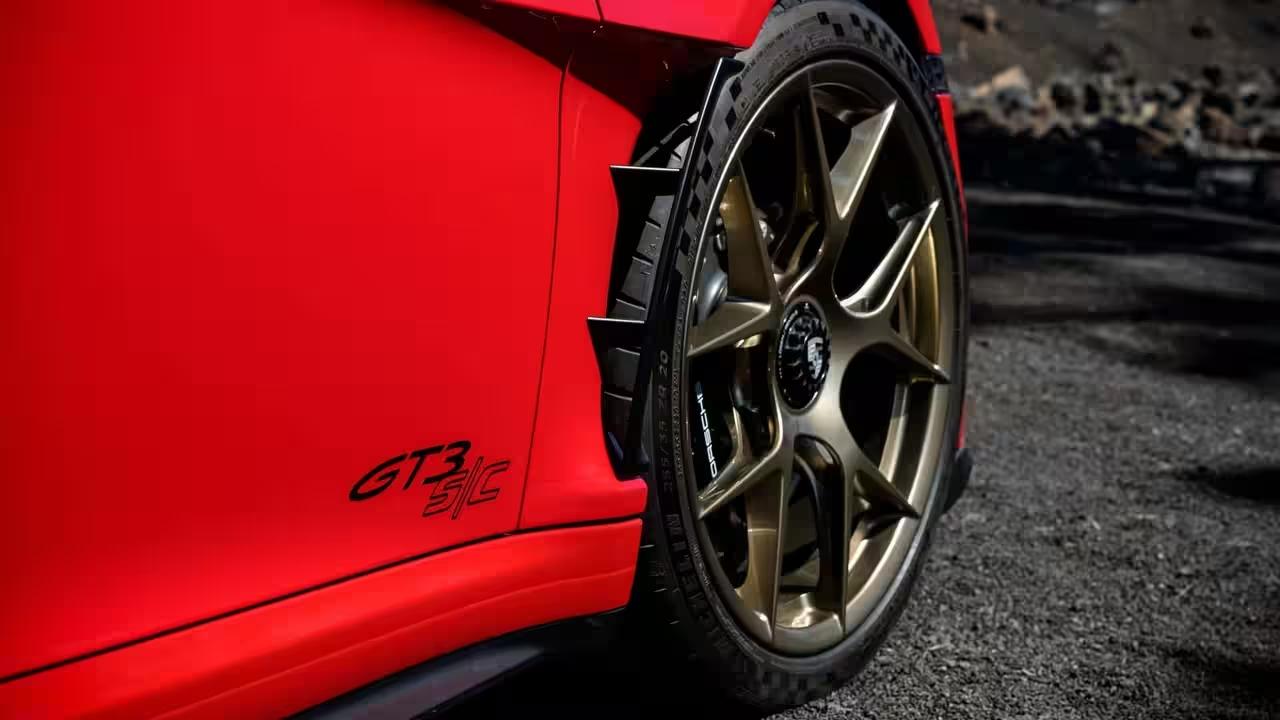
The new 911 GT3 S/C becomes the first open-top 911 with a double wishbone front suspension (instead of the simpler MacPherson setup), dramatically improving precision at the limit. Additionally, braking is handled by standard carbon-ceramic brakes (PCCB), which are 20 kilograms lighter than cast iron alternatives.
Carbon diet and soft top
The main challenge in creating a convertible is excess weight. Folding roof mechanisms typically add mass, but Porsche has addressed this brilliantly. The car’s curb weight is just 1,497 kg — only 30 kg heavier than the previous Speedster and significantly lighter than a standard 911 convertible.
The secret lies in extensive use of carbon fiber. The fenders, hood, doors, rear stabilizer, and even structural reinforcements are made from carbon composite. The fabric roof, supported by magnesium elements, can be opened or closed in just 12 seconds. It can be operated with a single button even while driving, at speeds of up to 50 km/h.
Pricing, launch, and exclusive options
Production of the model is already underway, with dealers in the U.S. and Europe expecting the first units in autumn 2026. The starting price is $275,350 (approximately €235,000). For those seeking exclusivity, the Street Style package is available. It includes gold brake calipers, special body graphics, houndstooth interior trim, and a walnut gear shift lever. Buyers can also order exclusive Porsche Design watches with a titanium case, available only to owners of this model.
A wide selection of cars on the portal DOMCar.
Photos: autokinito.com.cy