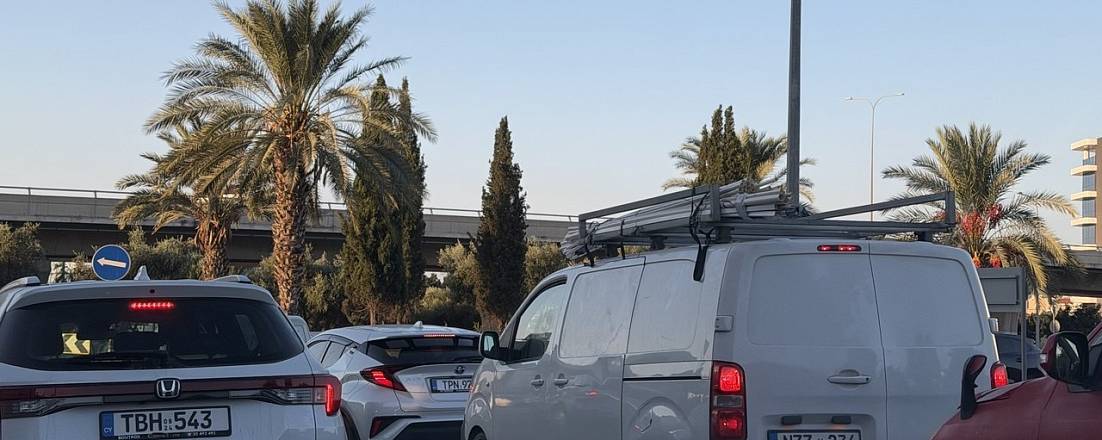
Limassol is facing one of its most serious transport problems in recent years. Up to 100,000 vehicles use the city’s bypass road every day, while the existing road infrastructure is struggling to cope with the growing traffic flow.
Limassol Mayor Yiannis Armeftis describes traffic congestion as the city’s biggest problem. According to him, more than 100 projects are currently at different stages of preparation and implementation, aimed at improving road conditions, developing public transport and making the city more convenient for pedestrians and cyclists.
Traffic in Limassol has increased by almost 50% in 11 years
Statistics show how dramatically the traffic burden on Limassol has changed. In June 2026, between 95,000 and 100,700 vehicles per day were recorded in both directions on the A1 motorway in the Agios Athanasios area and on the Limassol bypass. For comparison, in June 2015 the figure was around 68,000 vehicles per day. This means that daily traffic has increased by almost 32,700 vehicles over 11 years.
The increase in traffic is particularly noticeable in the mornings and evenings. Queues form on major roads, at entrances and exits to the city, and around roundabouts. For residents, this means spending more time on the road, including on journeys to work and school. The problem is also reflected in how residents perceive the urban environment. A survey conducted as part of Limassol’s development planning found that three out of four residents are frustrated by traffic, while 76% want fewer cars in their neighbourhoods.
Why roundabouts are the most vulnerable points
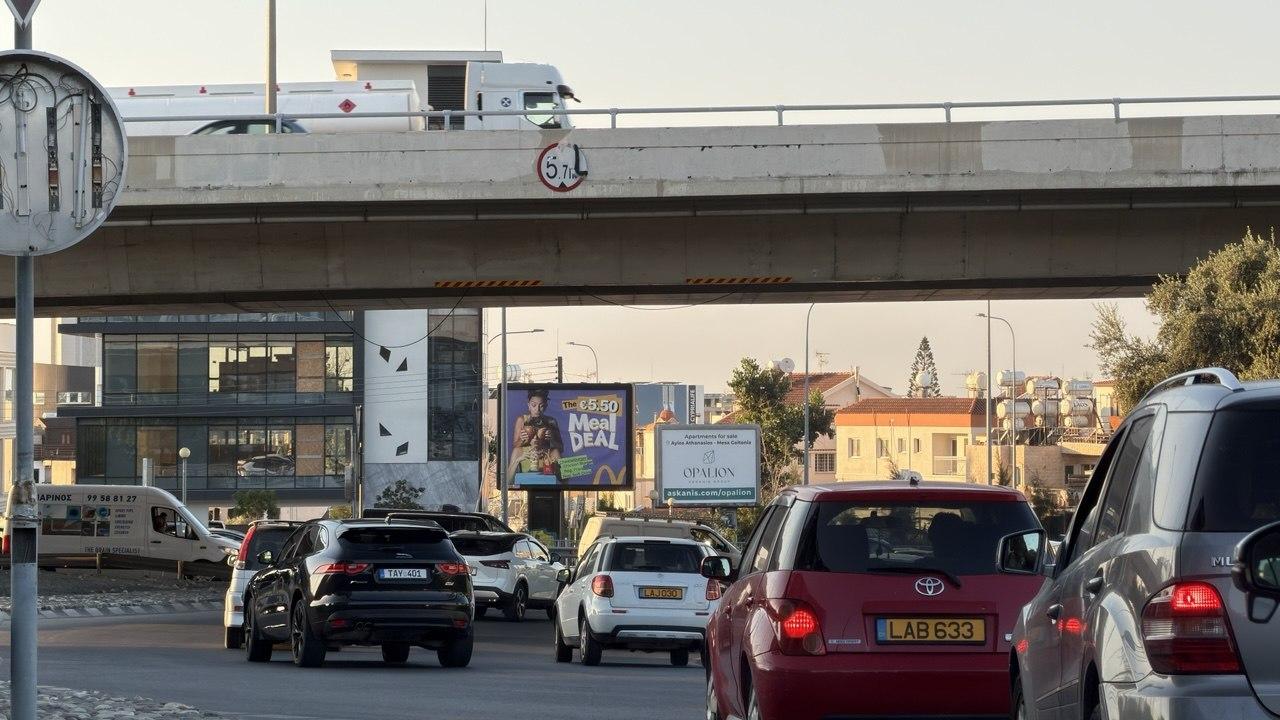
According to Armeftis, Limassol’s transport problem is not limited to a few isolated road sections. The city effectively depends on six main roundabouts, which are already operating at the limits of their capacity. At the same time, alternative entrances and exits were not created in time. As a result, traffic pressure from the roundabouts spills over onto major city streets and the motorway.
The A1 has also long ceased to function solely as an intercity motorway. Today it is used daily by residents of Limassol itself and neighbouring municipalities, meaning that it has effectively become part of the city’s transport system. The mayor links the current situation to Limassol’s rapid development. The city and its population grew faster than the transport infrastructure, so the municipality now has to deal with accumulated problems while also planning roads for future growth.
More than 100 projects: roads, Park&Ride and smart traffic lights
The Municipality of Limassol’s transport portfolio includes more than 100 projects. They cover different timeframes, from quick local solutions to major infrastructure developments. These include:
- new streets and road connections;
- Park&Ride facilities;
- traffic management measures;
- pedestrian bridges;
- green routes;
- a smart parking system;
- smart traffic lights;
- new traffic-management measures;
- improved conditions for pedestrians and cyclists.
The mayor stresses that a project must be prepared to a stage where it can qualify for funding. Without a ready project, it is impossible to move on to practical implementation. If he could launch three projects immediately, Armeftis would prioritise the reconstruction of major urban roads and landmark public spaces with greater priority for pedestrians and cyclists, construction of the northern bypass, and further development of public transport.
In the long term, the municipality is even considering the possibility of creating a tram system in Limassol. However, there is no specific project yet and discussions are still at an early stage.
The mayor considers the northern Limassol bypass to be one of the most important projects. It is intended to connect cross-city transport routes and create alternative traffic corridors, reducing pressure on existing roads. Important connections under consideration include sections between Yiannou Kranidioti and Saitta streets, as well as between Andrea Papandreou and Fasoula. The project is significant not only for Limassol itself, but also for neighbouring municipalities and the wider district.
A wide selection of cars is available on DOMCar.
Photos: pixabay.com