

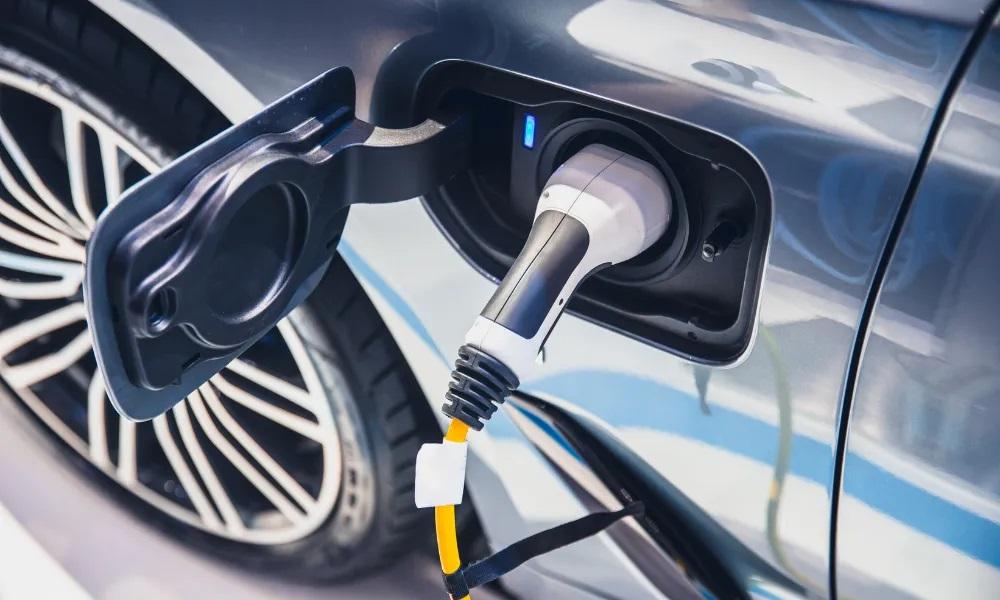
Fresh statistics from the European service Eurostat for 2024 show noticeable differences between countries and regions of the European Union in the number of electric cars. According to the published data, in Cyprus the share of fully electric passenger cars remains extremely small. They account for only about 0.51% of the total number of passenger cars on the island.
This figure is significantly lower than the average level in the European Union and shows that the transition to environmentally friendly transport in Cyprus is happening more slowly than in most northern and central regions of Europe. Experts explain this by several factors at once: the relatively high cost of electric vehicles, the limited network of charging stations, as well as the popularity of used gasoline and diesel cars, which traditionally dominate the local market.
At the same time, in recent years the Government of Cyprus has been trying to stimulate the transition to environmentally friendly transport. The island has subsidy programs for the purchase of electric vehicles, and the infrastructure of charging stations is also developing. Despite this, the mass transition to electric transport is only beginning.
Northern Europe leads in the number of electric cars
According to Eurostat statistics, the highest indicators of electric car use are recorded in the northern regions of the European Union. For the second year in a row, the leader remains the Flevoland region in the Netherlands, where the share of electric cars has reached 22.1% of the total number of passenger cars. This is five percentage points more than a year earlier.
High indicators are also demonstrated by major Scandinavian and Northern European regions. In Stockholm the share of electric cars is about 14.4%, and in the Copenhagen area it is 13.3%. Significant indicators are also observed in the Belgian region of Flemish Brabant and the Danish region of Midtjylland. In several other Northern European regions, the share of electric transport has already exceeded the 10% mark.
Eurostat notes that the geographical distribution of electric vehicles in Europe is extremely uneven. Northern countries and regions demonstrate the fastest transition to environmentally friendly transport thanks to developed infrastructure, active government support programs, and higher incomes of the population. In southern countries, including Cyprus, Greece, and several regions of Italy and Spain, this process is progressing much more slowly.
Cyprus among the regions with a large number of commercial vehicles
Despite the low share of electric cars, Cyprus stands out by another indicator. The island is among the 15 regions of the European Union with the highest share of commercial transport. According to Eurostat data, approximately 17% of all registered vehicles in Cyprus are commercial vehicles.
This category includes trucks, agricultural machinery, specialized vehicles, and other machines used for business and transportation. The high share of such transport is explained by the characteristics of the island’s economy and logistics, where the transportation of goods, construction, and tourist infrastructure play a significant role.
Which regions of Europe lead in commercial vehicles
The first place among European regions in the share of commercial transport is occupied by the Italian region of Valle d’Aosta. Here such vehicles make up about 22% of the entire vehicle fleet. Experts explain this by the geographical position of the region on the border with France and Switzerland. One of the key cargo transportation routes between European countries passes through it.
High indicators were also recorded in the western part of Flanders in Belgium, as well as in some regions of Ireland and French Guiana. Among the regions with a large number of commercial transport were also several areas of Finland, Belgium, and Spain.
Why the structure of vehicle fleets differs in different regions
According to Eurostat specialists, many factors influence the distribution of transport types. The transport infrastructure of the region is of great importance, including the network of highways, railways, seaports, and airports. The structure of the economy also plays an important role: in regions with developed industry, agriculture, or logistics, the share of commercial transport is usually higher.
For Cyprus this indicator is connected with the characteristics of the island economy, where construction, tourism, trade, and international transportation are actively developing. In the coming years experts expect a gradual increase in the share of electric cars on the island, especially as the network of charging stations expands and new support programs for environmentally friendly transport appear.
A large selection of cars on the portal DOMCar.
Photos: pixabay.com, DOM