Cyprus' electric vehicle market continues to grow steadily, but the island remains ranked last among European Union member states in terms of electric vehicle adoption. Despite rising sales, experts believe that reaching the ambitious target of 85,000 electric vehicles by 2030 will be extremely difficult without long-term government support and a clear subsidy framework.
According to the latest figures, around 8,200 electric vehicles are currently on Cyprus' roads, including passenger cars, motorcycles, buses, and commercial vehicles.
Electric Vehicle Sales Continue to Grow in Cyprus
According to the European Alternative Fuels Observatory, by the end of 2025 electric vehicles and plug-in hybrids accounted for just 0.77% of Cyprus' total vehicle fleet — the lowest share in the European Union.
Nevertheless, market growth remains encouraging. Electric vehicles represented 2.7% of all new registrations in 2023, rising to 4% in 2024 and reaching 4.7% by the end of 2025. As a result, Cyprus has already overtaken eight EU countries in terms of new electric vehicle registrations.
The Ministry of Transport aims to increase the country's electric vehicle fleet almost tenfold. Achieving this goal would require approximately 15,000 new EV registrations every year, far above current sales levels.
Charging Infrastructure Continues to Expand
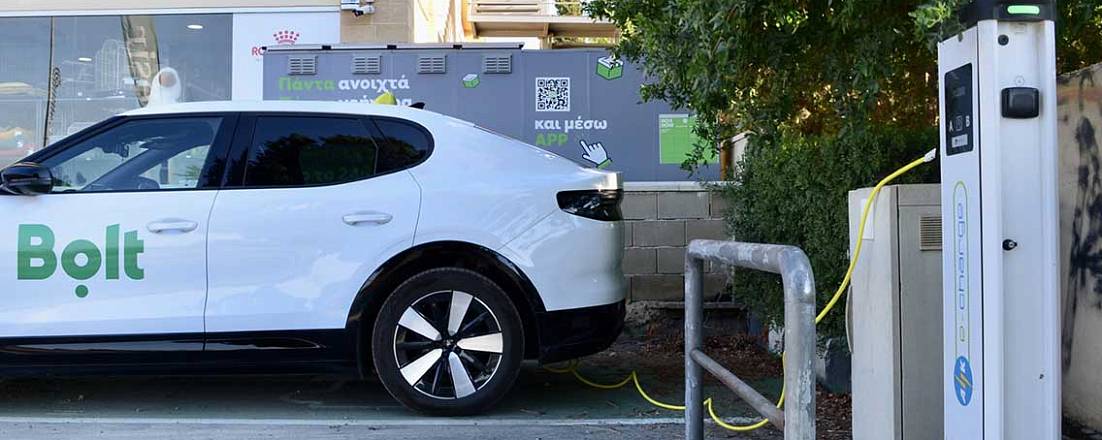
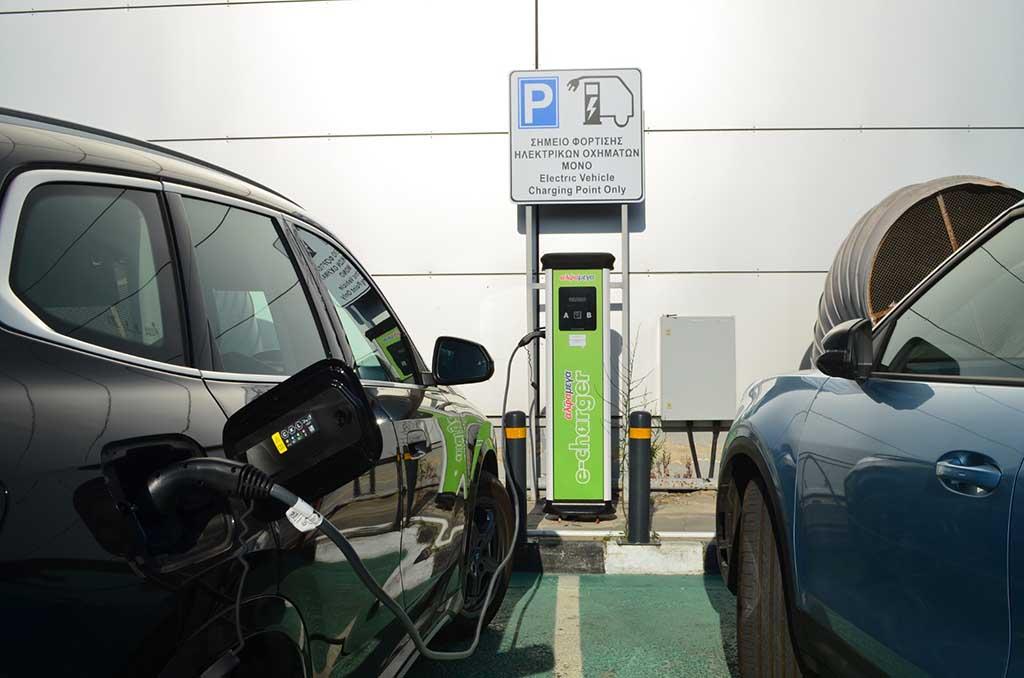
Just a few years ago, the lack of charging infrastructure was one of the biggest obstacles for electric vehicle owners. The situation is gradually improving. While almost the entire public charging network was previously operated by the Electricity Authority of Cyprus (EAC), private companies are now rapidly entering the market, installing charging stations at supermarkets, shopping centres, petrol stations, hotels, and business parks.
Further momentum has come from new European regulations. Since the beginning of 2025, all non-residential buildings with more than 20 parking spaces have been required to install at least one EV charging station. Battery technology has also continued to improve. Many modern electric vehicles now offer driving ranges exceeding 400 kilometres — enough to travel from Paphos to Ayia Napa and back without recharging.
The Biggest Challenge Remains the Lack of a Stable Subsidy Programme
Despite improvements in infrastructure, uncertainty surrounding government incentives remains the biggest barrier for buyers. Previous subsidy programmes were financed through the European Union's Recovery and Resilience Facility. During the third phase, launched in 2024, the government provided subsidies of €9,000 for the purchase of 1,827 new and 104 used electric vehicles. An additional 1,228 owners of older vehicles received grants of €7,500 when replacing them with electric models.
However, in April 2025 the number of available subsidies was unexpectedly reduced due to restrictions linked to the EU funding timetable. A fourth support programme was later introduced, offering 520 grants of up to €9,000, but applications were accepted only until 30 June.
The government has not yet announced what will happen after the current programme ends. Although officials previously stated that a comprehensive electric mobility strategy through 2030 was being prepared, details of future subsidy schemes have still not been published. According to industry representatives, this lack of predictability is discouraging potential buyers, many of whom are postponing purchases for fear of missing out on government incentives.
Why Electric Vehicles Remain Expensive
Electric vehicles are still generally more expensive than comparable petrol or diesel-powered models. However, experts point out that running costs are significantly lower thanks to inexpensive charging, reduced maintenance requirements, and the absence of regular oil changes and many routine servicing expenses.
Chinese manufacturers are also increasing competition for European brands. Following the arrival of several major Chinese automakers in Cyprus, the prices of new electric vehicles have become increasingly affordable, even after taking into account current EU import tariffs.
The used electric vehicle market remains another challenge. Since the United Kingdom left the European Union, Cyprus has become the EU's only left-hand traffic country while maintaining restrictions on importing vehicles over five years old from non-EU countries. Experts have suggested introducing an exemption specifically for electric vehicles to make them more affordable for consumers.
What Lies Ahead for Cyprus' Electric Vehicle Market
Experts agree that interest in electric vehicles among Cyprus residents will continue to grow. This trend is being driven by the expansion of charging infrastructure, the arrival of new models, falling battery costs, and increasingly strict European environmental regulations.
However, government policy remains the decisive factor. If the authorities introduce a long-term subsidy programme and provide stable, predictable rules for both buyers and dealers, the market could accelerate significantly. Otherwise, reaching the target of 85,000 electric vehicles by 2030 will remain extremely challenging despite growing public interest in sustainable transport.
Browse a wide selection of vehicles on DOMCar.
Photos: DOM, Pixabay