
Cyprus is an ideal place for sports car enthusiasts. Sunny weather, scenic mountain roads, and long coastal highways create the perfect conditions for enjoying a high-performance vehicle. However, buying a sports car on the island is about much more than choosing a fast and attractive model. It is a complex process that requires consideration of numerous factors, from registration requirements and legal procedures to the realities of the local used car market and ongoing maintenance costs.
In this guide, we explore the key aspects of buying a sports car in Cyprus. You'll learn how to choose the right model, what to inspect before purchasing, which documents are required for registration, and what the true cost of ownership looks like.
Choosing a sports car: categories and their characteristics
The Cypriot market offers a wide range of sports cars, from affordable performance versions of mass-market models to exclusive hypercars. Understanding which category your chosen car belongs to has a direct impact on its purchase price, maintenance costs, and overall ownership experience. Manufacturers and models can generally be divided into three groups:
- Category One — low-volume premium manufacturers. These cars are often built to order with bespoke specifications for each owner. Production numbers rarely exceed a few hundred or thousand units. This category includes Ferrari, Lamborghini, as well as exclusive models such as the recently unveiled Tuthill GT-One, inspired by racing cars and limited to just 22 units. Their main advantage is maximum exclusivity, although customisation options are generally limited to paint colour, interior materials, instrumentation, and infotainment systems. Due to their firm suspension and track-oriented setup, these cars are rarely practical for everyday driving.
- Category Two — premium performance brands. This includes manufacturers such as Porsche, Aston Martin, and Jaguar. Their production volumes reach tens of thousands of vehicles, and they are generally better suited to everyday use. Porsche, for example, offers not only dedicated sports cars but also performance SUVs that remain comfortable in urban environments. Nevertheless, maintenance costs remain high, and many mechanical components are subjected to significant stress.
- Category Three — high-performance versions of mass-market models. Classic examples include the BMW M Series (M3, M5) and Mercedes-AMG. These vehicles offer an excellent balance between performance and practicality. They deliver impressive driving dynamics while remaining comfortable enough for daily use. Their equipment levels are similar to standard models, while the extensive options list allows buyers to tailor the car to their preferences and budget.
The key takeaway is to decide how you intend to use the car. If you're planning occasional track days and weekend drives, the first category may be ideal. For commuting and everyday use, the third category is usually the most practical choice.

Technical condition: inspecting wear-prone components
When buying any used vehicle, its technical condition is the most important factor. For sports cars, this is even more critical, as they are often driven much harder than ordinary vehicles. A professional pre-purchase inspection is not merely recommended — it is essential. Pay particular attention to the following:
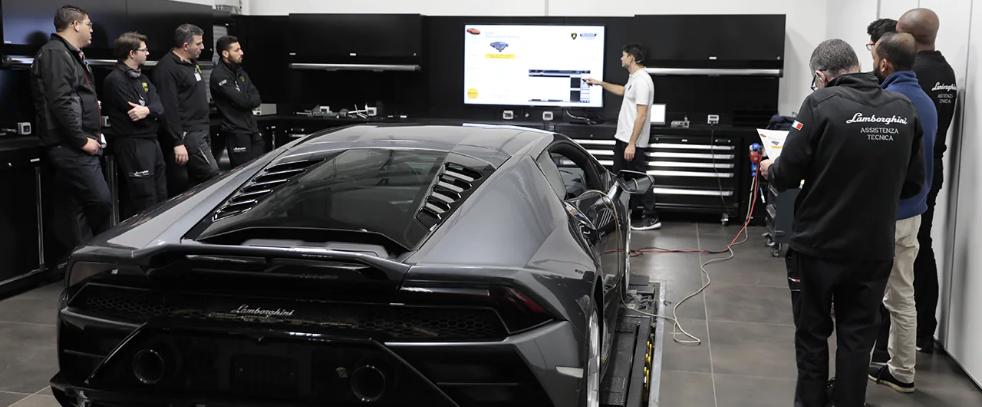
- Body structure. One of the most critical aspects is checking the structural integrity of the body. Cosmetic panels such as bumpers, wings, and doors can easily be replaced or repainted. However, damaged chassis rails or structural components are much more difficult—and sometimes impossible—to repair properly. Even a flawless-looking car may have been involved in a serious accident. A specialised workshop equipped to measure body geometry is strongly recommended.
- Engine and transmission. Aggressive driving inevitably accelerates wear. Check the engine oil level and the condition of the automatic transmission fluid. A complete service history is reassuring but not a guarantee. Ideally, once the vehicle is purchased, all fluids should be replaced regardless of what the documentation states.
- Suspension and braking system. These components are subject to significant wear on performance cars. Pay close attention to:
- Brake discs and pads. These are consumable items, but replacement costs can be extremely high. For example, an original ceramic front brake disc for a Porsche Cayenne can cost more than €10,000 per wheel.
- Tyres. High-performance tyres are considerably more expensive and wear out faster.
- Suspension and drivetrain components. Assess the remaining lifespan of these parts. A visual inspection and diagnostic testing will help determine future maintenance costs.
- Accident repairs. Many used sports cars have previously suffered accident damage. Structural deformation affecting chassis rails or other load-bearing components can compromise both safety and handling. If you are unsure, arrange an independent inspection or use a specialist vehicle sourcing company that provides a comprehensive technical report.
Legal aspects and vehicle registration in Cyprus
Cyprus has specific regulations governing vehicle imports and registration. Understanding the main procedures is essential:
- Import duty and VAT exemptions. If you import a vehicle from another EU country, no customs duty is payable. To prove EU origin, you must provide a T2L or T2LF document issued by the exporting country's customs authorities. New vehicles are subject to 19% VAT. However, a vehicle is considered "used" and exempt from VAT if it is more than six months old or has travelled over 6,000 km.
- MOT inspection. The MOT is mandatory for vehicles over four years old and must be completed every two years. The inspection costs a fixed €35 and includes checks of the braking system, lighting, tyres, steering, emissions, and general body condition. This is particularly important for sports cars, as many components wear more quickly. If the vehicle fails, owners have 30 days to rectify defects before reinspection. Fines for an expired MOT can reach €1,700.
- Insurance. Cyprus offers specialist insurance policies for both classic and sports cars. For example, classic vehicles with FIVA certification may be insured even while participating in motorsport events within Cyprus. Owners of modern sports cars are generally advised to choose comprehensive insurance covering third-party liability, accidents, fire, and theft.
- Document verification. When buying from a private seller, always verify that both the vehicle title and registration certificate are available. Missing documentation is a serious warning sign. It is also advisable to ensure that the vehicle is free from outstanding finance or registration restrictions. Imported vehicles must be correctly cleared through customs and registered in Cyprus. Specialist import companies often assist with this process.
The real cost: purchase price and ownership expenses
Owning a sports car involves far more than the purchase price. Total ownership costs include servicing, insurance, consumables, and unexpected repairs.
- Purchase price. The cost naturally depends on the manufacturer, model, age, mileage, and specification. However, a "cheap" sports car often proves expensive to own. Ceramic brake discs, specialist tyres, premium lubricants, and performance filters should all be factored into your budget.
- Official dealer servicing. Cyprus has authorised service centres for many premium brands. Porsche, for example, offers Porsche Original Service packages. In other countries, a Minor Service starts from around €599 and a Major Service from approximately €799. While local prices may vary, these figures demonstrate that even routine servicing represents a significant expense. Purchasing a used vehicle through programmes such as Porsche Approved provides both a comprehensive inspection and warranty. Factory-trained technicians and genuine parts are especially important for high-performance vehicles.
- Saving money on options. Unlike highly exclusive models, performance versions of mass-market cars usually offer extensive optional equipment. By avoiding unnecessary features and researching common reliability issues, buyers can reduce costs while improving long-term dependability.

Practical buying steps: avoiding costly mistakes
Although buying a sports car in Cyprus follows the same basic principles as purchasing any other vehicle, it requires far greater attention to detail.
- Define your budget and objectives. Decide both how much you are prepared to spend on the purchase and how much you can comfortably allocate to annual running costs. Determine whether the vehicle will serve as daily transport or a weekend-only toy.
- Research the market. Buyers in Cyprus can purchase through authorised dealers, specialist import companies (such as DOMCar), or private sellers. Many importers source vehicles from the UK, Japan, and mainland Europe while handling the entire import and registration process.
- Carry out a comprehensive inspection. A visual inspection, test drive, and professional diagnostic assessment are all essential. Inspect the underside on a lift and check for leaks or suspension wear. If you lack technical expertise, hire an independent specialist.
- Verify the legal documentation. Ensure that all paperwork is complete and that the vehicle has no legal or financial encumbrances.
- Negotiate before making a decision. Since many sports cars remain on the market for extended periods, buyers often have room to negotiate. Base your offer on the inspection results and current market value.
Buying a sports car in Cyprus is an exciting experience that deserves careful planning. Success comes from balancing passion with practical judgement. Remember that a sports car offers not only thrilling performance but also significant responsibility. A well-chosen and properly maintained vehicle will provide years of enjoyment, while Cyprus' sunny roads offer an ideal environment for making the most of it. Take your time, inspect every candidate thoroughly, and seek professional advice whenever necessary. By doing so, your dream of owning a sports car in Cyprus can become a rewarding reality rather than an expensive mistake.
A wide selection of vehicles is available on the DOMCar portal.
Photos: DOM, Pixabay