

Dashboard warning lights are your personal assistant, constantly informing you about the condition of your vehicle's systems. Understanding these signals is essential for both safety and preventing expensive repairs, especially in Cyprus, where hot summers and mild winters create additional challenges for drivers. In this article, we'll explain the most important indicators and what to do when they appear.
Why It's Important to Understand Dashboard Indicators
Modern vehicles are equipped with dozens of sensors that continuously send information to the instrument panel. Dashboard warning lights can generally be divided into three main categories:
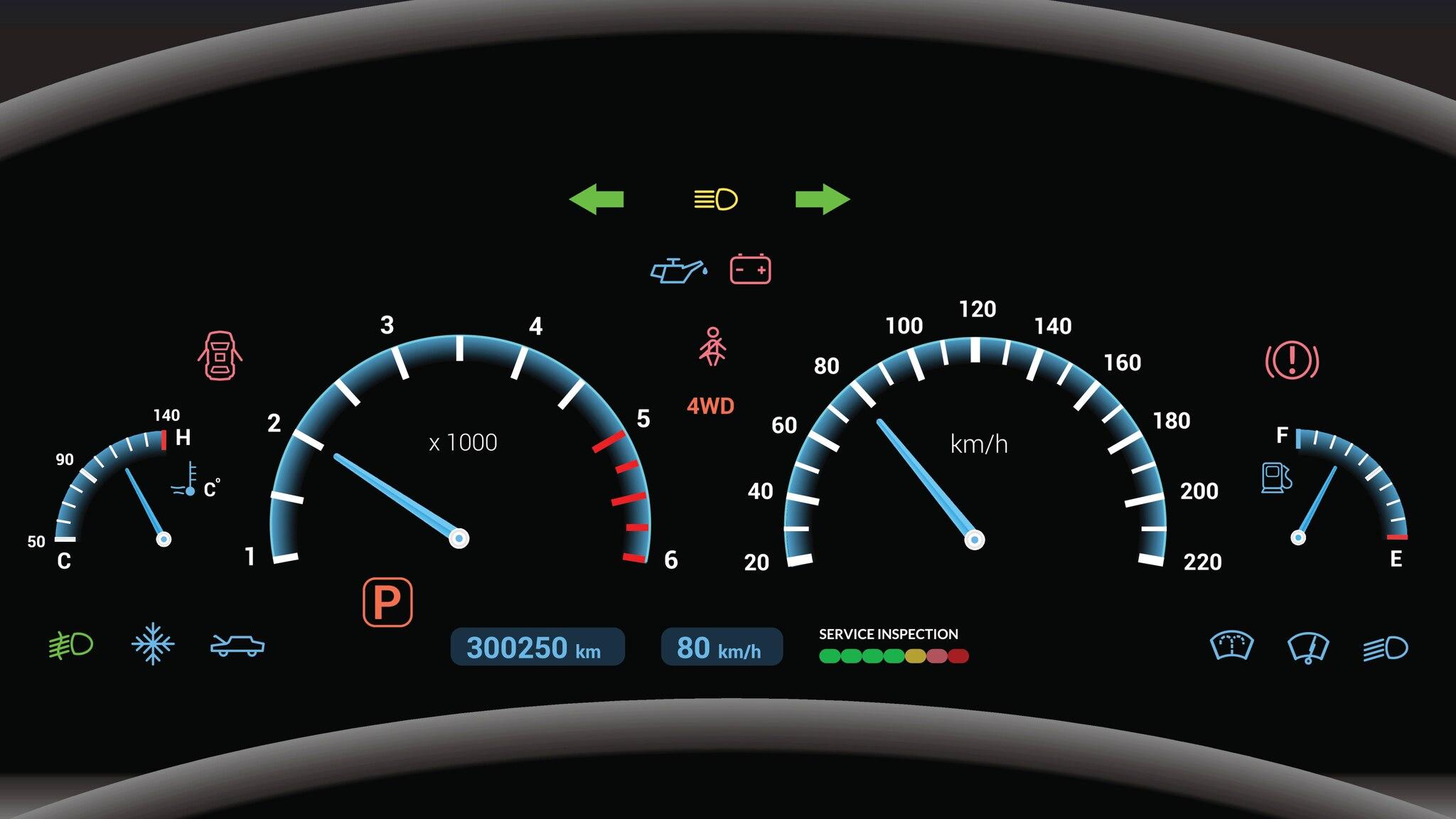
- Informational indicators (green, blue, or white) — these show that a particular feature or system is active, such as parking lights, high beams, cruise control, or driver assistance systems. They do not require any action other than acknowledging them.
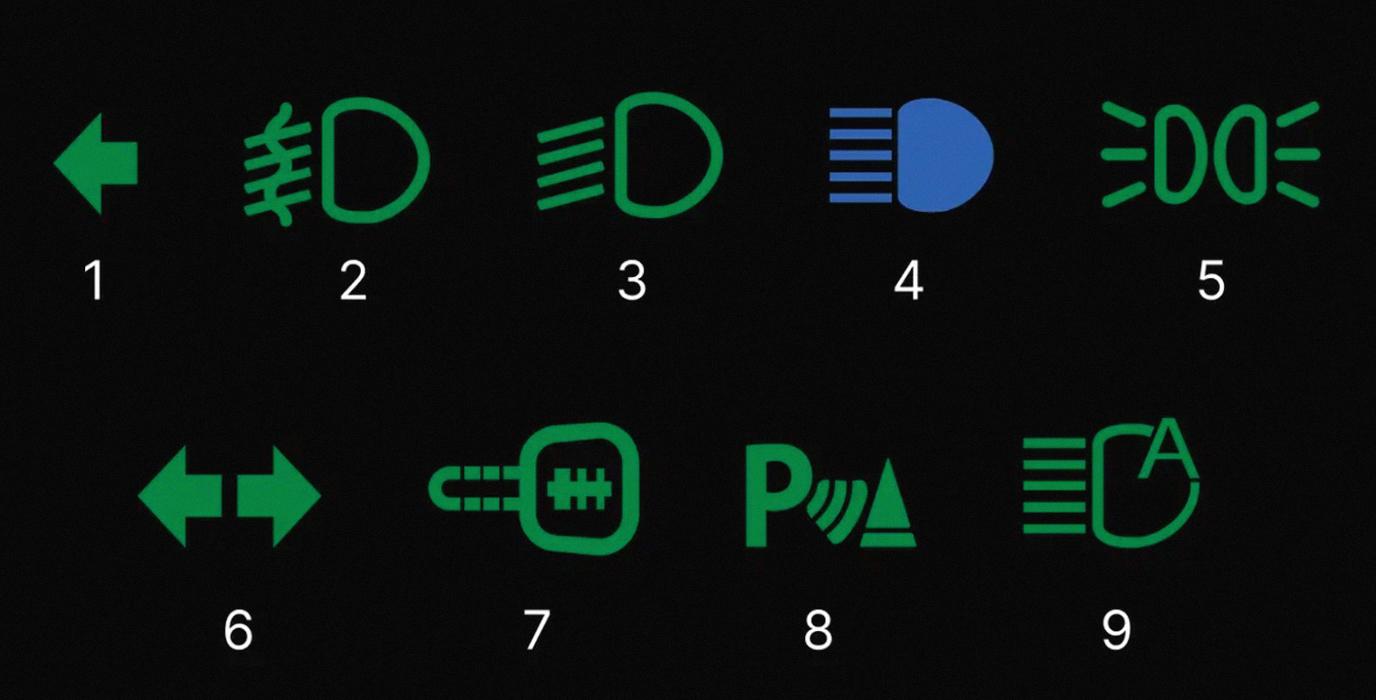
- Warning indicators (yellow or orange) — these indicate potential issues that require attention, such as low fuel, worn brake pads, or scheduled maintenance. You can usually continue driving, but you should not postpone a visit to a service center.
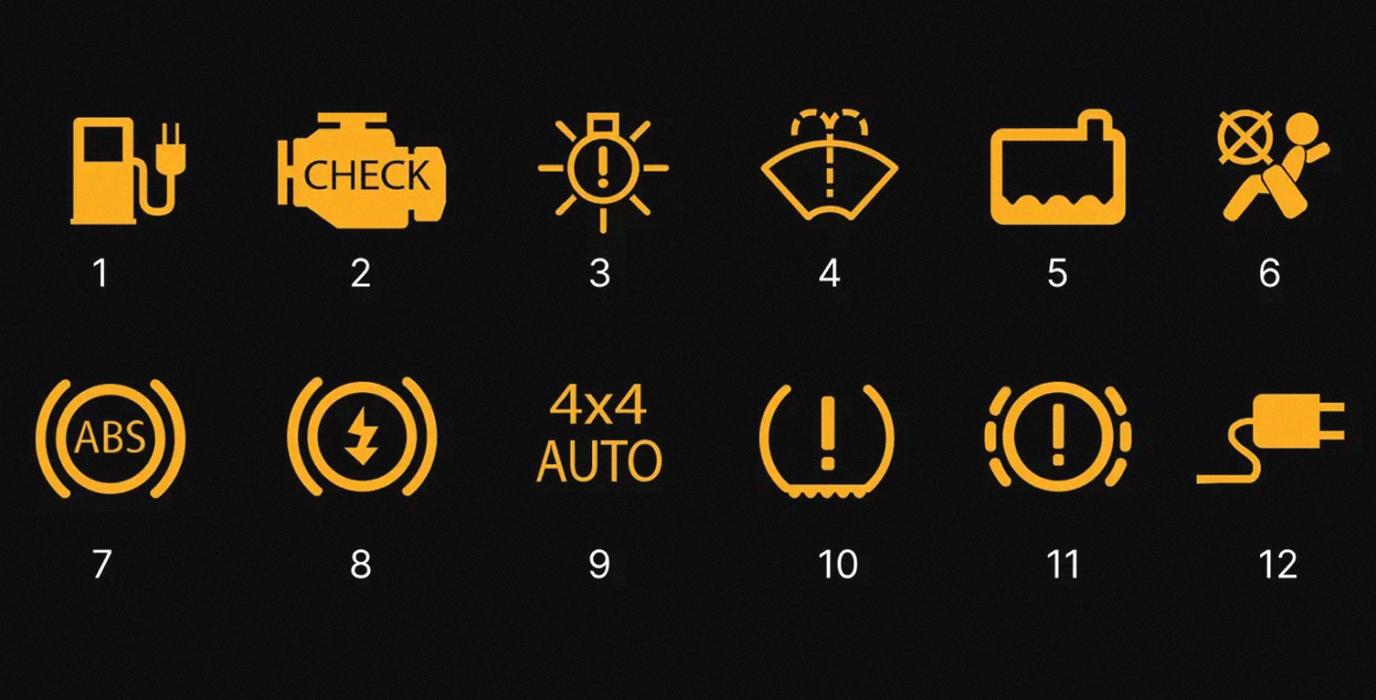
- Critical indicators (red) — these require you to stop the vehicle immediately. Ignoring them may result in serious accidents or major mechanical failures. If a red warning light appears, pull over safely and switch off the engine.
Informational Indicators: Everything Is Working Normally
These lights simply indicate that a particular system is switched on and operating correctly. No action is required.
- Low Beam/Parking Lights — a green headlight or light bulb icon with beams. Make sure it is activated so you don't drive without lights after dark.
- High Beams — a blue headlight icon with horizontal beams. Use high beams only on roads outside urban areas to avoid blinding oncoming drivers.
- Fog Lights — a green headlight icon with a wavy line and a beam pointing downward (front fog lights) or to the left (rear fog lights). In Cyprus, fog lights can be particularly useful during the rainy season and in mountainous areas.
- Cruise Control — a speedometer icon with an arrow. This indicates that the system is active. It's especially useful during long highway journeys.
- Auto Hold — a green Auto Hold indicator. The system keeps the vehicle stationary after stopping, making it particularly convenient in traffic and at traffic lights.
- Lane Keeping Assist — a green icon showing a vehicle between lane markings. The system helps keep the car within its lane. On Cypriot highways, this feature can significantly improve driving comfort.
Warning Indicators: A Diagnostic Check Is Recommended
Yellow and orange warning lights usually don't require an emergency stop, but they should never be ignored.
Check Engine
One of the most common and intimidating dashboard symbols. It indicates a problem within the engine management system. The cause may range from a loose fuel cap to serious issues involving the catalytic converter or fuel system.
What should you do? Check whether the fuel cap is properly tightened — this is a surprisingly common issue in Cyprus because of local refueling practices. If the problem persists, schedule a diagnostic inspection. A flashing Check Engine light requires you to stop immediately.
Anti-Lock Braking System (ABS)
An ABS symbol enclosed in a circle with side brackets. If the light remains on after the engine starts, the ABS is malfunctioning. This means the wheels may lock during emergency braking, reducing the driver's ability to maintain control.
What should you do? Your standard brakes will continue to function, but without ABS support. You can usually drive to a service center, but exercise additional caution on wet roads, particularly during Cyprus's rainy season.
Tire Pressure
An indicator shaped like a tire cross-section with an exclamation mark. It signals that one or more tires have lost pressure. In Cyprus, where road surfaces can become extremely hot and temperatures fluctuate significantly, maintaining proper tire pressure is especially important.
What should you do? Stop and check the pressure in all tires. Inflate them to the recommended level. If the warning light remains on, you may need to reset the system through the vehicle's menu.
Electronic Stability Program (ESP)
A flashing icon showing a vehicle with skid marks. This does not indicate a malfunction. The light flashes when the system is actively helping maintain traction and stability, such as during winter rain on Cypriot roads.
What should you do? If the indicator is flashing, the system is working correctly. Reduce your speed and remain alert. If the light stays on continuously, the system may have been manually disabled or may require servicing.
Adaptive Front Lighting System (AFS)
A headlight icon with arrows pointing in different directions. Many vehicles sold in Cyprus use this system to improve visibility while turning. If the indicator turns yellow, there may be a problem with the headlight adjustment mechanism.
What should you do? Schedule a diagnostic inspection at a service center.
Low Windshield Washer Fluid
An icon showing a windshield with water being sprayed onto it. This is simply a reminder to refill the washer fluid reservoir. Considering the amount of dust on Cypriot roads, especially during summer, this indicator may appear quite frequently.
What should you do? Refill the washer fluid reservoir. The warning light should disappear automatically.
Critical Indicators: Stop the Vehicle Immediately!
Red warning lights are the most important indicators on the dashboard. They signal serious malfunctions that make continued driving dangerous.
Oil Pressure
The oil can icon with a drop of oil indicates a critical loss of engine oil pressure. In Cyprus, where summer temperatures frequently exceed +35°C, the risk of oil overheating is significantly higher. If this warning light appears while driving, stop immediately and switch off the engine. Continuing to drive can severely damage the engine and may even cause it to seize completely.
What should you do? Check the oil level using the dipstick. If the oil level is normal but the warning light remains on, do not restart the engine. Call a tow truck.
Battery Charging System
The battery icon with plus and minus signs indicates a charging system problem. This is usually caused by a faulty alternator or a broken drive belt. The vehicle may continue to operate for another 20–30 km using the remaining battery charge, but this is risky because the engine could stop unexpectedly, especially on highways such as the Limassol–Nicosia route.
What should you do? Visit a service center as soon as possible to inspect the alternator. If you're far from your destination, calling a tow truck is the safer option.
Engine Overheating
An icon showing a thermometer submerged in liquid or a temperature gauge entering the red zone. In Cyprus's hot climate, this is one of the most relevant warning indicators. Engine overheating may be caused by low coolant levels, a faulty cooling fan, or a malfunctioning thermostat.
What should you do? Pull over, switch off the engine, and allow it to cool down. Never remove the radiator cap while the engine is hot, as escaping steam can cause serious burns. Check the coolant level in the expansion tank.
Transmission Oil Temperature
An indicator showing a thermometer inside a gear. This warning is particularly relevant for vehicles with automatic or dual-clutch transmissions. Heavy traffic on Cypriot roads, especially during summer, can increase the risk of transmission overheating.
What should you do? Stop in a safe location and allow the transmission to cool down. If the warning appears regularly, have the system inspected.
Parking Brake and Brake System
A red icon with the letter P inside a circle appears when the parking brake is engaged. If it remains illuminated after the parking brake has been released, it may indicate low brake fluid or a serious braking system fault. Driving under these conditions is extremely dangerous.
What should you do? Stop immediately and check the brake fluid level. If the level is normal but the warning light remains on, call a tow truck.
Cyprus-Specific Considerations and Useful Tips
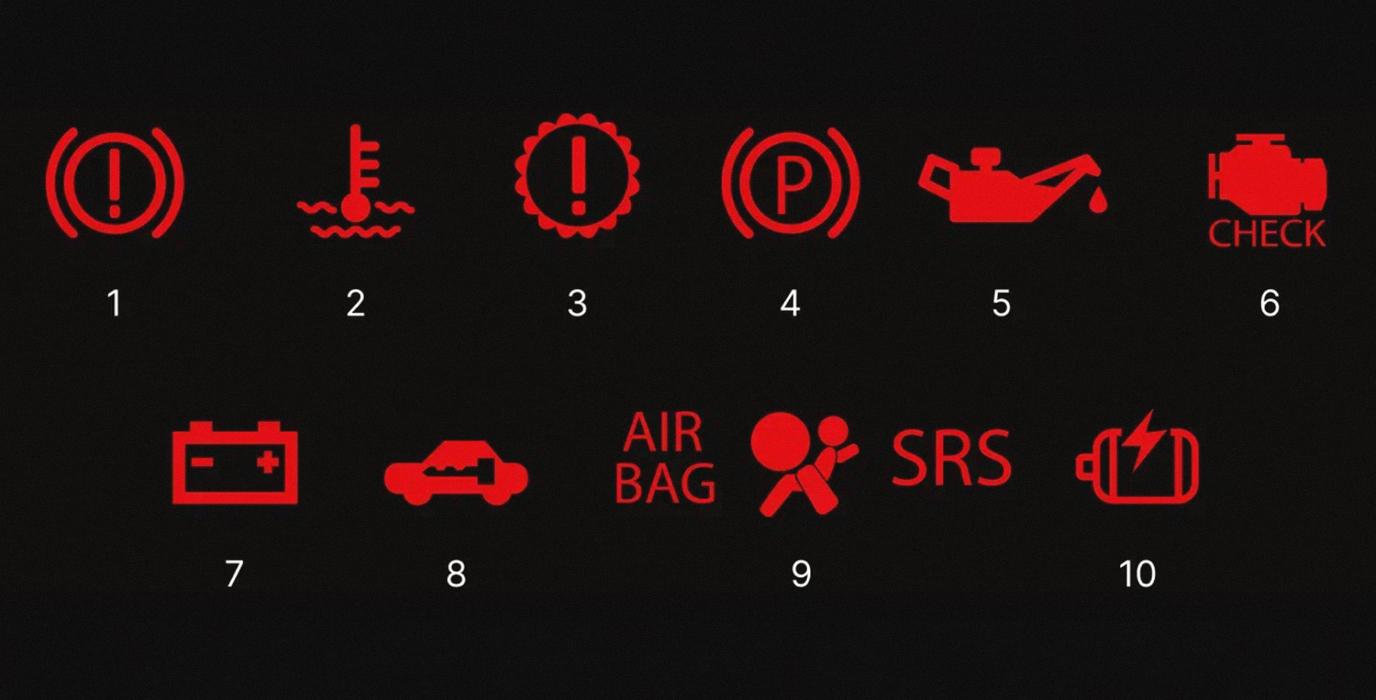
Cyprus's climate and road conditions directly affect both vehicle systems and the way drivers should respond to dashboard indicators.
- Heat and the engine. During summer, engine temperatures can be higher than usual. If the temperature gauge approaches the red zone, don't wait for the warning light to appear. Pull over, turn off the air conditioning, and allow the engine to cool.
- Tires and pressure. The pressure difference between cold tires and tires exposed to direct sunlight can reach 0.5 bar. Always check tire pressure when the tires are cold, especially before a long trip from Nicosia to Paphos.
- Fuel quality. Cyprus has several fuel station networks that offer varying fuel quality. Poor-quality fuel is a common reason for the Check Engine light to appear. Refuel at reputable stations and always ensure that the fuel cap is tightly closed.
- Humidity and electronics. Winter humidity in Cyprus can cause electrical contacts to oxidize, resulting in random warning messages. If a warning light disappears after restarting the engine, the issue may simply be related to electrical contacts. However, a persistent warning light should never be ignored.
- Emergency services. If a red oil pressure or temperature warning appears while driving and you're unsure whether it's safe to continue, call for roadside assistance. In Cyprus, emergency services can be reached 24 hours a day by dialing 112.

Your dashboard is the language your vehicle uses to communicate with you. Ignoring warning lights can result in a breakdown at the worst possible moment. Remember the basic rule: red means stop, yellow means caution, and green means you're good to go. If you're uncertain about the meaning of a particular symbol, consult your vehicle's owner's manual — every car has one. Drive safely on Cyprus's roads!
A wide selection of vehicles is available on the DOMCar portal.
Photos: DOM, Pixabay