Cypriot engineer Paraskevas Nikolaou has identified four key reasons why island residents are in no hurry to switch to public transport despite the sharp rise in fuel prices. They include passenger information, travel time, route coordination and service quality.
Why buses still lose out to cars
According to Nikolaou, it is wrong to explain Cypriots’ dependence on cars solely as a matter of habit. The main problem is that the island’s transport system has for many years developed around private cars. Whenever traffic increased, the main response was to build new roads and add more lanes.
At the same time, alternative forms of transport developed much more slowly. As a result, residents are encouraged to give up their cars without always being offered an equally convenient alternative. The expert believes that a functioning alternative must be created first, and only then can changes in transport habits be expected. In European cities, people can easily switch from cars to buses, metros or trams precisely because public transport allows them to reach their destination quickly and predictably.
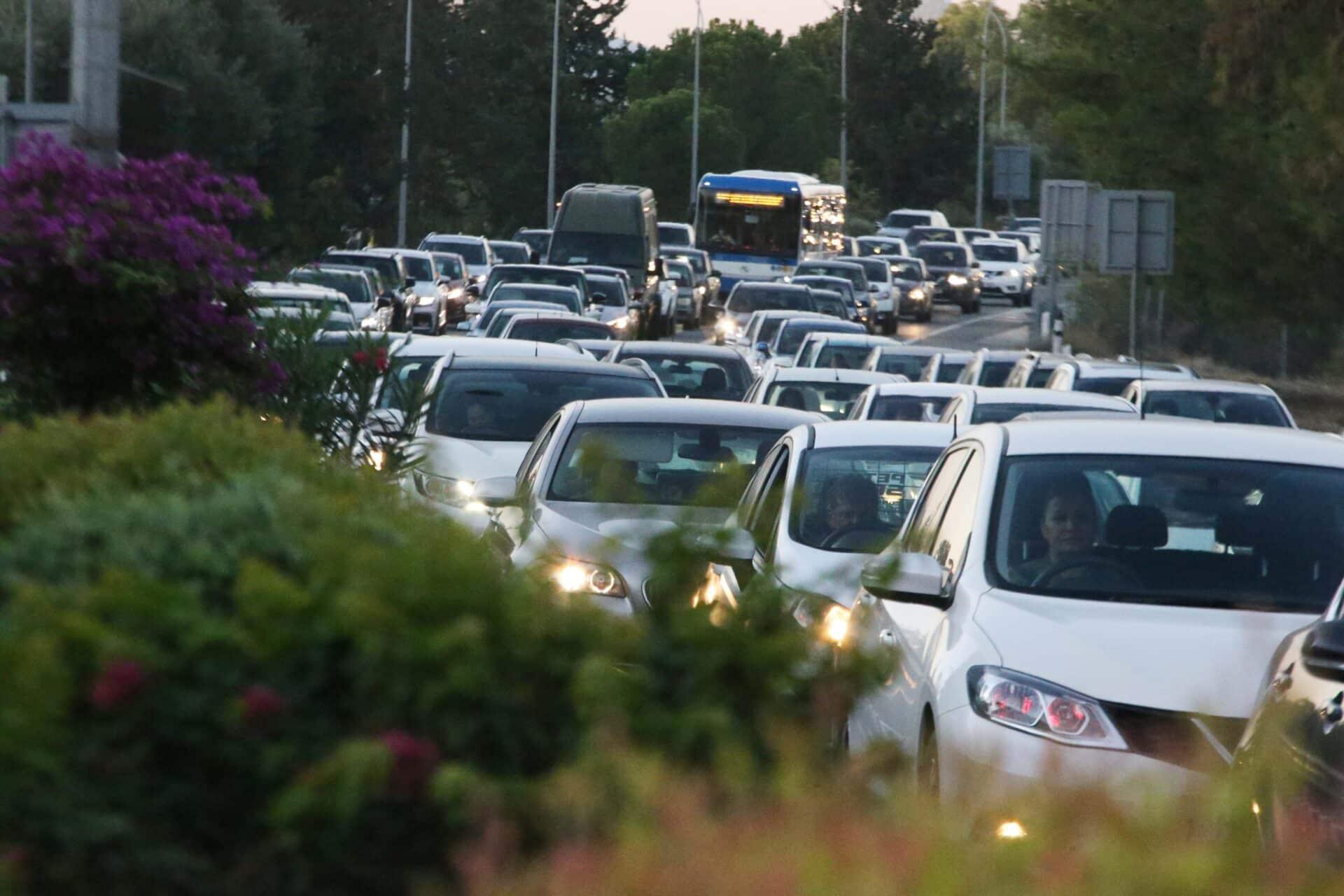
The problem becomes especially noticeable at the start of the academic year. With schoolchildren and students returning, the number of daily journeys increases and congestion on the streets of Nicosia and Limassol becomes even heavier.
Four weak points of Cyprus’s bus system
Nikolaou identified the main weaknesses of the island’s bus system. They include:
- Passenger information. The technology for tracking buses already exists. For example, the Pame app allows passengers to plan journeys, view routes and receive real-time information on bus arrivals. An updated version of the app was released in July 2026. However, the information system itself must work reliably and provide passengers with clear information immediately before the journey. If a person does not know when the bus will actually arrive, they cannot properly plan their day. The government system also has access to real-time bus telematics data, so the technical capability for such a service already exists.
- Travel time. A bus stuck in traffic together with cars has almost no advantage. Moreover, passengers first need to walk to the stop, then wait for the bus and sometimes make a transfer. If a journey takes one hour by car but two or three hours by bus, most people will choose the car. This is why Nikolaou considers dedicated bus lanes one of the key solutions: buses must be able to move faster than general traffic.
- Transfers and route coordination. A journey between cities may be convenient until the transfer stage. For example, a passenger may take an intercity bus to Nicosia but then need to switch to a city route. If the timetables are not coordinated, the waiting time cancels out the advantages of the entire journey. According to the expert, public transport should be planned as a single system for the whole of Cyprus rather than treating each district’s routes in isolation.
- Service quality. Cleanliness, the condition of buses, comfort and reliability directly affect people’s willingness to use public transport. Even if problems with individual buses are not widespread, negative incidents are well remembered by passengers and shape their perception of the entire system.
Why new roads do not solve congestion
One common response to transport problems is road expansion. Nikolaou points to the effect known as induced demand. When a road is widened and traffic initially becomes lighter, more drivers begin using it. As a result, after some time the additional capacity fills up and congestion returns.
That is why building new lanes alone cannot solve Cyprus’s transport problems in the long term. At the same time, the bus network, dedicated lanes, convenient transfers and other travel options must also be developed. This task is becoming especially important against the backdrop of rising fuel prices.
Cheap or free buses are not the only solution
Every increase in fuel prices traditionally triggers discussions about tax cuts and compensation for drivers. Nikolaou suggests taking a broader view and investing in public transport. The expert even allows for free travel as one possible incentive, but stresses that low fares alone will not make people switch to buses. If public transport is late, journeys take significantly longer and transfers are inconvenient, passengers will still prefer the car.
The issue also has a social dimension. Rising fuel costs are particularly painful for lower-income families, students and people who need to use two cars. At the same time, there are groups of residents who cannot rely on owning a car at all — elderly people, people with limited mobility, students and low-income citizens. For them, public transport is not simply a cheaper or greener alternative, but a necessary way to get to work, university, a doctor or government services.
Another discussion concerns cycling infrastructure. In Limassol, divider posts on cycle lanes have caused controversy, but Nikolaou believes such solutions should not be abandoned because of initial opposition. If research shows that physical separation of traffic flows improves safety, the state should support such projects.
This is especially important for Cyprus because cyclists remain more vulnerable road users. In countries with developed cycling infrastructure, physical barriers are not always used, but on the island, where the car still occupies a central place in the transport system, clearer separation of traffic flows may be necessary.
Thus, rising petrol and diesel prices alone will not make Cypriots switch to buses en masse. A real alternative to the car will appear only when public transport can offer the essentials — predictable travel times, convenient transfers, reliable information and consistent service quality.
A wide selection of cars is available on the DOMCar portal.
Photos: pixabay