The Japanese corporation Toyota Motor Corp. once again confirmed its status as the world’s largest automaker, retaining first place in the global ranking for the sixth consecutive year. Despite geopolitical instability, trade wars, and increasing pressure from Chinese brands, the company not only held its ground but also significantly increased the gap from its main competitor—the Volkswagen Group.
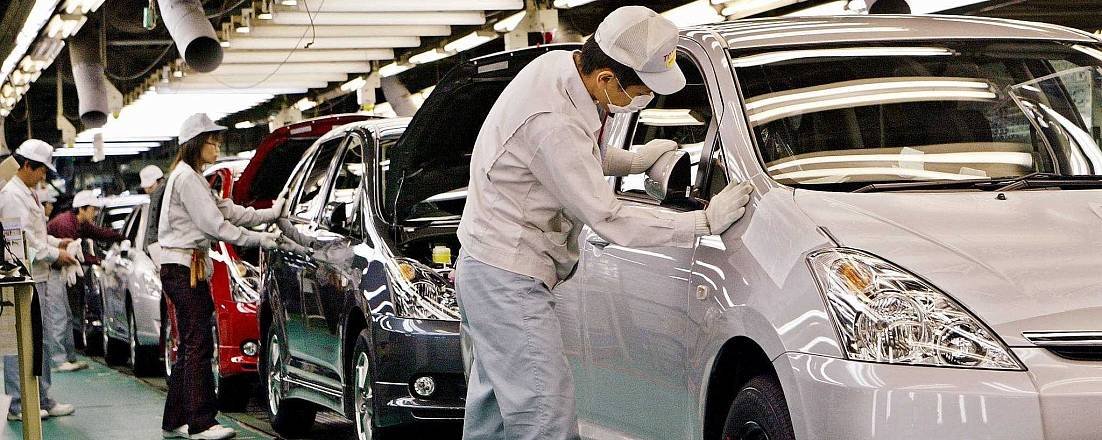
By the end of 2025, Toyota’s global sales, including subsidiary brands Daihatsu and Hino Motors, grew by 4.6% compared to the previous year and reached a record 11.3 million vehicles. Production indicators also showed confident growth: output increased by 5.7% to 11.2 million units. By comparison, total sales of the Volkswagen Group fell by 0.5% and stood at around 9 million vehicles, further highlighting the difference in momentum between the two automotive giants.
Tariff pressure and adaptation to new conditions
One of the serious challenges for the global automotive industry in recent years has been trade restrictions. In particular, the 15% tariffs introduced by the administration of Donald Trump on vehicles and auto components from Japan supplied to the United States significantly changed operating conditions for Japanese manufacturers. Most companies tried to mitigate the impact by relocating part of their production to U.S. territory; however, even these measures resulted in cumulative losses amounting to billions of yen.
Nevertheless, Toyota managed to maintain resilience. Analysts note that flexibility in the production chain and a focus on in-demand technologies allowed the company not only to avoid a sharp decline but also to show growth in key markets, primarily in North America.
Success in the U.S. and Japan thanks to hybrids
Toyota showed particularly strong results in the United States, where sales of Toyota and Lexus vehicles grew by 8%, while production volumes increased by almost 10%. The main driver of this growth was the rising popularity of hybrid models, which many buyers now perceive as an optimal compromise between environmental friendliness, price, and independence from charging infrastructure.
The domestic Japanese market, which accounts for about 18 percent of the company’s global sales, also demonstrated impressive momentum. In 2025, Toyota’s sales at home increased by 12%, becoming one of the best results in recent years and indicating a recovery in consumer activity.
Competitors are losing ground
Against the backdrop of Toyota’s success, other Japanese automakers faced a noticeable downturn. Honda Motor Co. recorded a 7.5% decline in global sales, down to 3.5 million vehicles. The Chinese market proved especially painful, where Honda’s sales volumes dropped by as much as 24%, and production decreased by 9%.
Nissan Motor Co. also failed to avoid negative dynamics, selling about 3.2 million vehicles, which is 4.4% less compared to the previous year. These figures underline that Toyota’s stability amid an overall industry slowdown looks more like an exception than the rule.
China and the challenge from electric vehicles
One of the most challenging directions remains China—the largest passenger car market in the world. Local electric vehicle brands dominate here, primarily BYD, which overtook Tesla in 2024 and became the world’s largest EV manufacturer. In 2025, BYD delivered 4.6 million vehicles to customers, nearly half of which were fully electric.
Against this background, Toyota’s position in the electric vehicle segment appears modest. Last year, the company sold fewer than 200 thousand battery electric vehicles, with only 4,227 such cars delivered to customers in Japan itself. This indicates that, despite active investments in development, Toyota continues to rely on hybrid technologies, considering them a more universal solution for the transition period.
Strategy for the future
Experts note that it is precisely the cautious yet well-calibrated approach to transforming the model lineup that helps Toyota maintain leadership. The company actively develops hybrids, invests in hydrogen technologies, and gradually expands its electric vehicle lineup without risking everything on a single development scenario.
Against the backdrop of global uncertainty, growing competition from China, and tightening trade rules, Toyota remains an example of how scale, diversification, and a long-term strategy allow not just survival, but the setting of new records in the global automotive industry.
A large selection of vehicles on the portal DOMCar.
Photos: inbusinessnews.reporter.com.cy