

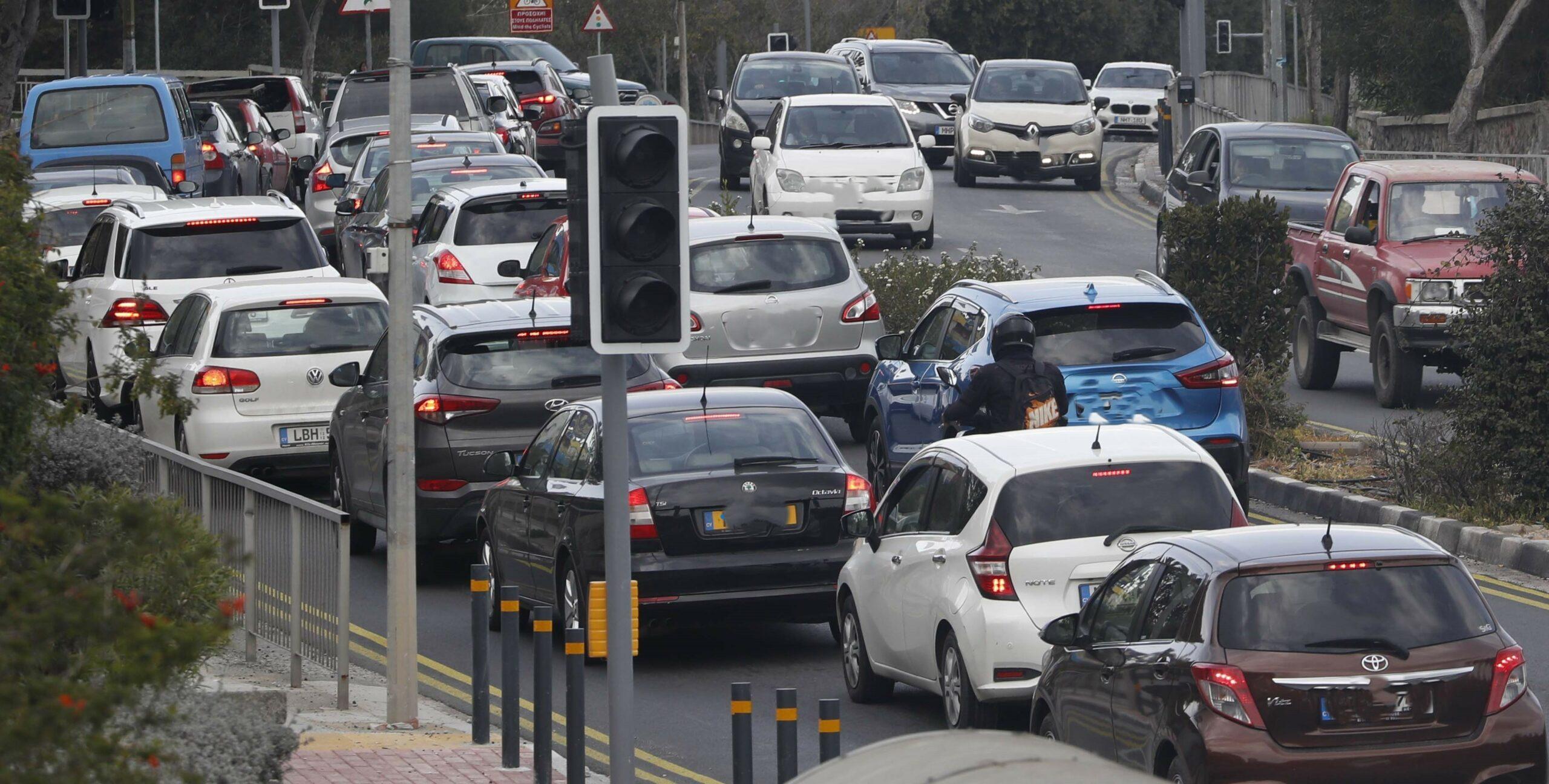
Between 2003 and 2025, Cyprus’s population increased by 38%, GDP by 98%, and the number of passenger cars by as much as 126%. In other words, the island’s level of motorisation grew significantly faster than its population. By 2025, Cyprus had around 1.1 million vehicles, more than 70% of which were passenger cars.
In particular, the number of registered vehicles reached 1,069,765. Of these, 157,714 vehicles, or 14.7%, were officially declared off the road and were not in use. This means that the actual number of vehicles in operation is lower than the total number of registered vehicles.
Cyprus also remains well above the EU average in terms of car ownership. In 2024, there were 661 passenger cars per 1,000 inhabitants on the island, compared with an EU average of 578 cars per 1,000 inhabitants. Italy, for example, had an even higher figure of 701 cars per 1,000 inhabitants. Cyprus therefore remains one of the European countries most dependent on private cars. The high level of car ownership is particularly noticeable in major cities, where the growing number of vehicles directly contributes to road congestion.
Petrol still dominates, but the vehicle fleet is changing
Despite the rapid development of greener transport, vehicles with conventional engines continued to make up the majority of Cyprus’s vehicle fleet in 2025. Petrol-powered vehicles accounted for 59% of the fleet, diesel vehicles for 33%, and hybrid and electric vehicles for 7%. However, the structure of new purchases is gradually changing.
In 2025, hybrid and electric vehicles accounted for 39% of new registrations. The figures for new passenger cars in 2024 are even more revealing: hybrids accounted for 47%, electric cars for 8%, and vehicles using conventional fuels for 45%. This means that more than half of all new passenger cars already belonged to greener categories. Overall vehicle registration figures also confirm strong demand.
In 2025, 52,508 vehicles were registered in Cyprus, up 5.8% year on year. The number of registered passenger cars rose to 40,778, an increase of 6.2%. The transition to electric and hybrid vehicles is accompanied by well-known limitations: purchase price, the development of charging infrastructure, charging speed, and electricity costs remain important factors for buyers.
The number of cars has nearly doubled, but fuel consumption has fallen
The growth of the vehicle fleet has not led to a proportional increase in fuel consumption. According to the study, the number of vehicles rose from around 650,000 in 2005 to 1.1 million in 2025, while overall fuel consumption remained relatively stable. The main reason is improved vehicle efficiency.
Average fuel consumption per vehicle fell from 900 litres per year in 2005 to 580 litres in 2025, a decrease of around 35%. Fuel consumption is highest between June and October. The figures are affected by the summer tourist season, holidays, an increase in the number of journeys, and intensive use of air conditioning in vehicles. This creates a paradoxical situation: the number of vehicles in Cyprus continues to grow significantly, while each vehicle consumes less fuel on average.
Road accidents: long-term progress, but 2025 was a worrying year
Against the backdrop of the growing number of vehicles, there is also one positive indicator: the long-term trend in road safety. Compared with 2008, the number of serious accidents fell by 59%, while the number of fatal road accidents decreased by 43%. In 2008, 82 fatal accidents were recorded, compared with 34 in 2023. Official statistics also show that 82 people died in road accidents in 2008.
The situation worsened in 2025, when 45 people died on Cyprus’s roads, compared with 41 in 2024. Preliminary European Commission data show 46 road deaths per 1 million inhabitants in 2025, compared with 42 a year earlier, an increase of around 10%. At the same time, the figure was still 13% lower than in 2019.
Driver distraction remains a separate problem. According to police data, 11 of the 45 deaths recorded in 2025 were linked to careless or inattentive driving, with mobile phone use cited as one of the key causes. Over three years, police recorded 31,066 offences related to the use of mobile phones while driving. The problem has continued in 2026: as of 24 August, 26 people had already died on Cyprus’s roads, 14 of them motorcyclists.
The growth of the vehicle fleet shows that Cyprus needs not only to expand its road infrastructure but also to develop alternatives to private cars. Public transport, cycling infrastructure, Park & Ride systems, and a network of charging stations are becoming increasingly important for the island.
A wide selection of cars is available on the DOMCar portal.
Photos: limassoltoday.com.cy