
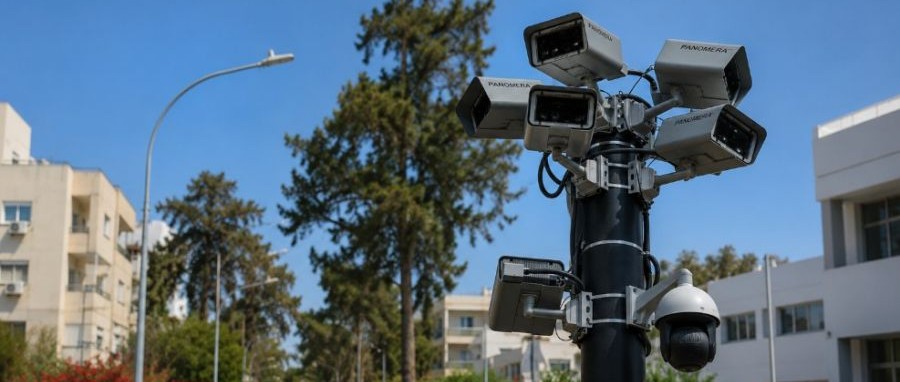
Cyprus continues to strengthen road safety enforcement. In the near future, the country's first stationary AI-powered traffic cameras will begin operating on Griva Digeni Avenue in Nicosia. The new equipment will replace the old cameras, which are currently out of service.
According to the Traffic Police, two state-of-the-art cameras will be installed in the Engomi area. They will monitor traffic in both directions at the same locations where the previous speed camera systems were installed. The contractor is currently completing the final technical work ahead of the official launch.
Artificial Intelligence Will Detect Only One Violation
The key feature of the new cameras is the use of artificial intelligence technology. During the initial phase, the system will detect only one traffic offence — using a mobile phone while driving.
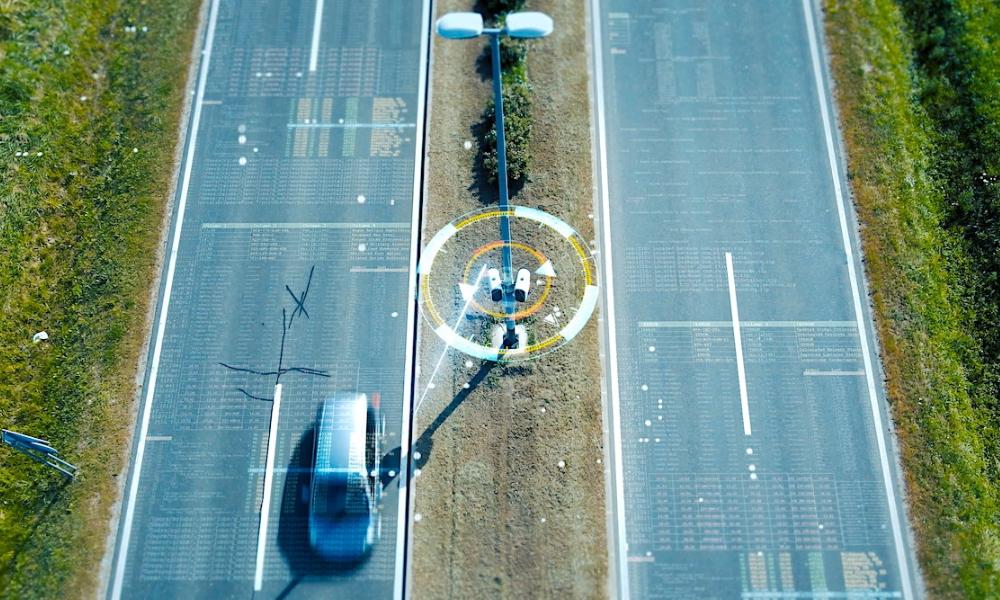
The cameras will record video of passing vehicles, after which a dedicated AI algorithm will analyse the driver's hand position. If the system determines that the driver was holding a mobile phone while the vehicle was moving, the footage will be forwarded to a police officer. A fine will only be issued after the evidence has been reviewed by an officer. In other words, the final decision will always remain with a human, while artificial intelligence will be used solely to identify potential violations automatically.
Why Authorities Are Introducing the New System
According to Cyprus Police, mobile phone use behind the wheel and driver distraction are now among the leading causes of fatal road accidents on the island. Official statistics show that distraction caused by smartphone use is responsible for around half of all fatal crashes.
Cyprus Transport Minister Alexis Vafeades previously stated that the problem has reached alarming proportions. According to him, some drivers not only continue texting while driving but even watch TikTok videos, putting both themselves and other road users at risk. For this reason, the Ministry of Transport is promoting AI-powered cameras as one of the key tools for improving road safety.
The Project Will Initially Operate as a Pilot Programme
The new cameras are being introduced as part of a pilot project. After evaluating the initial results, the authorities will decide whether to expand the programme to other parts of Nicosia and later to the rest of Cyprus. In the future, artificial intelligence may also be used to detect additional traffic offences, but during the first stage the system will focus exclusively on mobile phone use while driving.
At the same time, the authorities are changing the deployment strategy for mobile speed camera units. More mobile cameras will now operate within urban areas, as most fatal road accidents occur in towns and cities rather than on motorways.
In addition, the government is considering introducing an average-speed enforcement system on motorways. These cameras would record the time a vehicle enters and leaves a monitored road section. If the calculated average speed exceeds the legal limit, the driver would automatically be identified as committing an offence. Similar systems are already widely used across Europe and are considered among the most effective tools for reducing speeding.
More Than 360,000 Unpaid Fines Remain Undelivered
Meanwhile, police continue addressing the issue of a massive backlog of unpaid fines issued by the automated camera system. The number of outstanding fines has now reached 360,000. More than 50,000 of these date back to the first year of the camera programme. In many cases, offenders could not be identified or deliberately avoided receiving the notifications.
Police are currently serving these fines during roadside checks, at police stations, and at checkpoints along the Green Line. A new notification system is also expected to be introduced soon, allowing drivers to receive alerts about outstanding fines via SMS and email.
What Will Change for Drivers
Experts note that the introduction of artificial intelligence marks another important step in the digitalisation of road traffic enforcement in Cyprus. Automated systems will make it possible to identify dangerous driving behaviour more quickly while reducing the influence of human error during the initial screening of potential violations.
The authorities hope that the new technology will help reduce the number of road accidents, improve driver discipline, and make Cyprus' roads safer for both motorists and pedestrians. If the pilot project proves successful, the network of AI-powered cameras will gradually expand to cover the island's major cities and busiest roads.
Browse a wide selection of vehicles on DOMCar.
Photos: DOM, Pixabay