Fuel prices in Cyprus continue to rise amid the energy crisis in Europe. Diesel has reached a new all-time high, while the cost of filling a 50-litre tank is approaching €100. Why is fuel becoming more expensive on the island, and what should drivers expect next?
Diesel in Cyprus reaches a new all-time high
For motorists in Cyprus, recent weeks have brought another increase in refuelling costs. Against the backdrop of rising oil and petroleum product prices in Europe, diesel on the island has reached a new historic high. According to the Cyprus Consumer Protection Service, the average price of diesel reached €1.997 per litre on September 25. The previous record — €1.989 per litre — was recorded on July 12, 2022.
More than 100 filling stations in Cyprus were already selling diesel for more than €2 per litre. At the same time, the price difference between stations remained significant, with the cost per litre ranging from approximately €1.879 to €2.098.
Petrol has also become more expensive. The average price of 95-octane petrol at the time stood at €1.718 per litre. This means that filling up a car in Cyprus is becoming an increasingly noticeable expense:
- 50 litres of petrol — around €85.9;
- 50 litres of diesel — around €99.9.
A full tank of diesel has therefore almost reached the €100 mark. Prices at individual filling stations may be higher or lower than the national average. The difference becomes particularly noticeable for drivers who travel regularly, making price comparisons between stations increasingly relevant.
How Cyprus compares with the rest of Europe
The increase in prices on the island comes amid a sharp rise in fuel costs across the European Union. According to the European Commission’s weekly oil bulletin, between February 23 and September 21, 2026, the average price of Euro 95 petrol in the EU increased from €1.637 to €2.092 per litre. Diesel rose from €1.594 to €2.226 over the same period. In percentage terms:
- petrol increased by 27.8%;
- diesel increased by 39.6%.
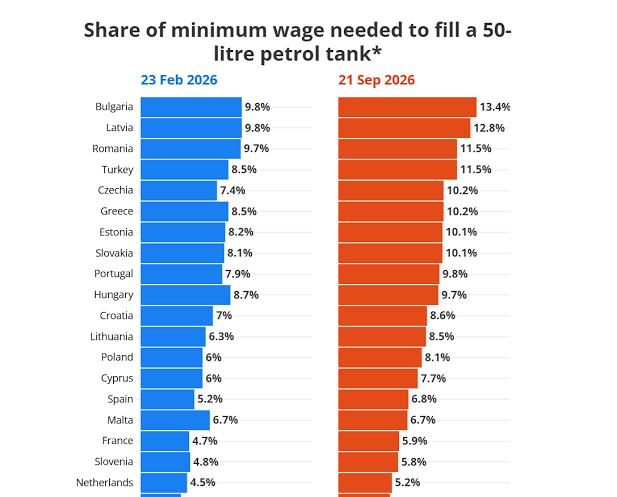
The increase has had a particularly strong impact on countries with lower household incomes. In Bulgaria, for example, a 50-litre tank of diesel now costs approximately 15.4% of the minimum monthly wage, compared with 9.9% before the war. In Luxembourg, the equivalent figure is around 3.8%.
Cyprus is not among the countries where a full tank exceeds 10% of the minimum wage. However, this does not mean that higher fuel prices are not affecting household expenses on the island.
Why fuel prices are rising and what Iran has to do with it
The main factor behind the sharp increase in prices has been instability in the global oil market following the outbreak of military conflict in Iran. One of the most important elements of the crisis is the situation around the Strait of Hormuz, through which around one-fifth of the world’s oil passes. Reduced supplies and concerns about further disruptions have pushed up the cost of oil and petroleum products. The diesel market has reacted particularly strongly.
Diesel is used not only by private motorists. It is also essential for trucks, construction machinery, agriculture and logistics. As a result, higher diesel prices may gradually increase the cost of transport, food and other goods.
Against the backdrop of record prices, increasing attention is being paid to the possible use of strategic fuel reserves in Europe. The United States is urging European countries to release up to 120 million barrels of diesel from strategic reserves over the next six months. Washington believes this could increase supply and ease pressure on prices.
The European Commission is discussing the issue with EU member states. At the same time, Brussels stresses that there is currently no immediate diesel shortage in the European Union. The main problem is high prices and pressure on the petroleum products market. Separately, Greek Prime Minister Kyriakos Mitsotakis and Italian Prime Minister Giorgia Meloni have appealed to European Commission President Ursula von der Leyen for greater budgetary flexibility to deal with high energy prices.
For Cyprus, EU decisions and developments in the global oil market have direct significance. The island cannot independently control global oil prices, so fuel costs at local filling stations will largely depend on how the international market develops further.
A wide selection of cars is available on DOMCar.
Photos: sigmalive.com