

Cyprus is preparing for another stage in modernizing road safety. The country's authorities plan to introduce an AI-powered camera system capable of automatically detecting drivers using mobile phones while driving. The announcement was made by Transport Minister Alexis Vafeades during the first meeting of the newly formed Parliamentary Transport Committee.
According to the minister, driver distraction caused by smartphones remains one of the leading causes of serious road accidents across the island. For this reason, the government has decided to use advanced technology to tackle what is widely regarded as one of the most dangerous issues affecting road safety in Cyprus.
Artificial intelligence will monitor drivers
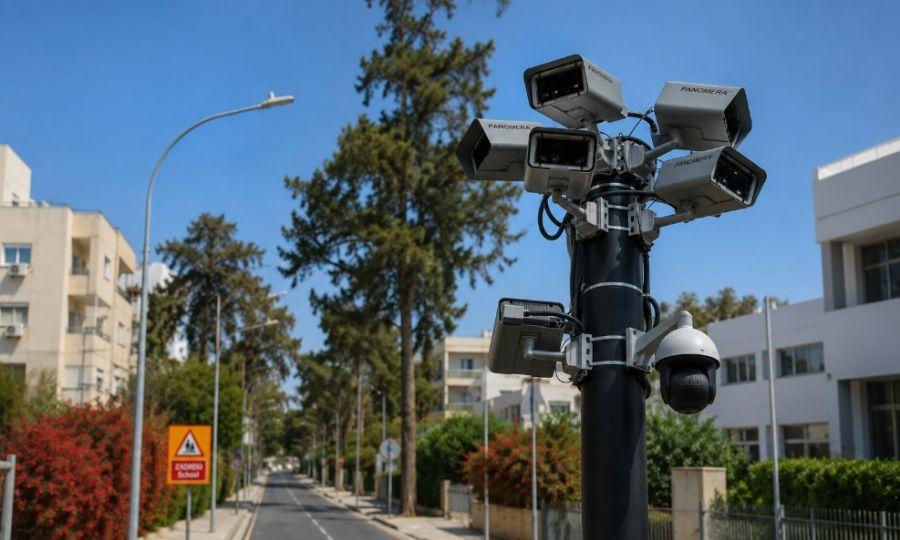
The new system is based on artificial intelligence and computer vision technology. The cameras will automatically analyze driver behavior and identify cases of mobile phone use behind the wheel. As Vafeades emphasized, the primary objective is not to increase the number of fines but to reduce road accidents and fatalities.
According to the Cyprus Police, driver inattention and mobile phone use while driving consistently rank among the leading causes of road traffic accidents. The problem is particularly severe in urban areas, where traffic density is significantly higher. During the initial phase, the system will operate in a pilot mode. Before its full deployment, the authorities plan to launch a public awareness campaign explaining how the technology works and reminding drivers of the dangers of using smartphones while driving.
Speed enforcement will become stricter
At the same time, the Ministry of Transport is preparing additional changes to the automated traffic enforcement system. Mobile speed cameras, which currently operate mainly on motorways, will gradually be redeployed to urban areas. According to official statistics, the majority of fatal road accidents in Cyprus occur within populated areas.
In addition, new fixed cameras will be installed at motorway entry and exit points to calculate average vehicle speeds. This technology is already widely used across many European countries. The system automatically records the time a vehicle takes to travel between two points and calculates its average speed. If the driver exceeds the legal limit, the information will be used to issue a fine. The current contract for operating the traffic enforcement system remains valid until September 2027 and may be extended for an additional two years.
Limassol seeks solutions to traffic congestion
One of the key topics discussed during the meeting was the traffic situation in Limassol. The city continues to struggle with growing congestion, which is already having a significant impact on residents' quality of life. According to the minister, approximately 12,000 new vehicles are added to Limassol's roads every year, representing one of the fastest-growing vehicle fleets in Cyprus.
At the end of May, representatives of the Ministry of Transport met with Limassol's municipal mayors and local community leaders. Following the discussions, a list of several dozen infrastructure projects was prepared for implementation over the coming years. Particular attention is being given to the construction of the Limassol North Bypass, one of the island's largest road infrastructure projects.
The construction tender is expected to be announced before the end of 2026. However, since the project will take at least three to four years to complete, the authorities are also considering temporary measures to ease congestion on the city's main roads.
Electric vehicle subsidies under review
The Ministry of Transport is also considering changes to the rules governing subsidies for electric vehicle purchases. The government aims to make support schemes more accessible to middle-income households. Final decisions will depend on the state budget and the country's overall financial situation.
Interest in electric vehicles continues to grow in Cyprus. Over the past few years, the number of registered electric cars and hybrids has increased severalfold thanks to government incentives and the expansion of charging infrastructure. Nevertheless, the share of fully electric vehicles remains well below the European average.
Cyprus continues its digital transformation of road infrastructure
The introduction of AI-powered cameras forms part of Cyprus' broader strategy to digitally transform its transport infrastructure. The authorities expect modern technology to reduce traffic violations, improve driver discipline, and lower the number of serious road accidents.
Experts note that similar systems have already proven effective in the United Kingdom, Australia, the Netherlands, and several other countries, where the installation of intelligent cameras has significantly reduced the number of drivers using mobile phones behind the wheel. Cyprus now plans to adopt the same approach.
Browse a wide selection of vehicles on the DOMCar portal.
Photos: pixabay.com, DOM