

Austrian manufacturer KTM has unveiled its 2027 model-year cross-country motorcycles. The new lineup includes six models: the two-stroke KTM 125 XC, 250 XC, and 300 XC, as well as the four-stroke KTM 250 XC-F, 350 XC-F, and 450 XC-F.
The main updates involve styling, chassis settings, and engine-management options. The design now features new graphics and red accents on the fuel tank shrouds. The motorcycles retain their competition-focused construction, 6-speed transmissions, and WP XACT suspension components.
When developing the models, KTM drew on experience from its factory racing program. The motorcycles are designed for cross-country competition, where riders encounter varied terrain combining fast sections with technically demanding parts of the course.
The XC and XC-F lineup differs from road-going sport motorcycles and conventional motocross bikes. These machines are designed primarily for off-road racing, with their construction focused on a combination of power, stability, handling, and endurance.
2027 KTM XC and XC-F: What Has Changed in the New Lineup?
For the 2027 season, KTM has retained six core models divided between two engine types. The update goes beyond new colors: the manufacturer continues to refine the platform, focusing on handling, stability, and the ability to adjust the motorcycles for different racing conditions.
New Factory Racing-Inspired Design
The most noticeable visual change is the updated color scheme. Red accents have been added to the fuel tank shrouds, highlighting the connection between the production motorcycles and KTM’s factory racing program.
The graphics are applied using In-Mold technology. Unlike conventional decals, this method helps protect the decorative layer from rapid wear. This is particularly important for motorcycles used on dirt tracks, where the plastics are constantly exposed to mud, sand, stones, and mechanical stress.
At the same time, KTM has retained its recognizable brand identity. The updated styling gives the motorcycles a fresher appearance without changing the familiar look of the company’s orange racing machines.
6-Speed Transmission
All six models are equipped with 6-speed transmissions developed with cross-country riding in mind. The range of gears allows riders to make better use of the engine’s characteristics depending on the section of the course. On fast sections, stable engine performance and a suitable gear ratio are important, while technical sections require the ability to select the right gear for specific conditions.
However, the motorcycle’s character is determined by more than the transmission alone. Engine displacement, power delivery, weight, frame geometry, and suspension performance also play major roles.
Frame and Weight Distribution
The XC and XC-F models are built around a lightweight chromoly steel frame. KTM uses this construction to achieve a balance of rigidity, stability, and predictable response to rider input. Engine positioning also plays an important role. Its placement helps centralize mass, influencing balance and handling when changing direction.
The manufacturer has also focused on the so-called anti-squat effect — resistance to excessive rear-end compression under acceleration. The corresponding chassis geometry helps maintain stability and make better use of rear-wheel traction. This is particularly important in cross-country racing, where a course may include loose dirt, rocky sections, bumps, and fast corners. Settings designed for different types of terrain help make the motorcycle’s behavior more predictable.
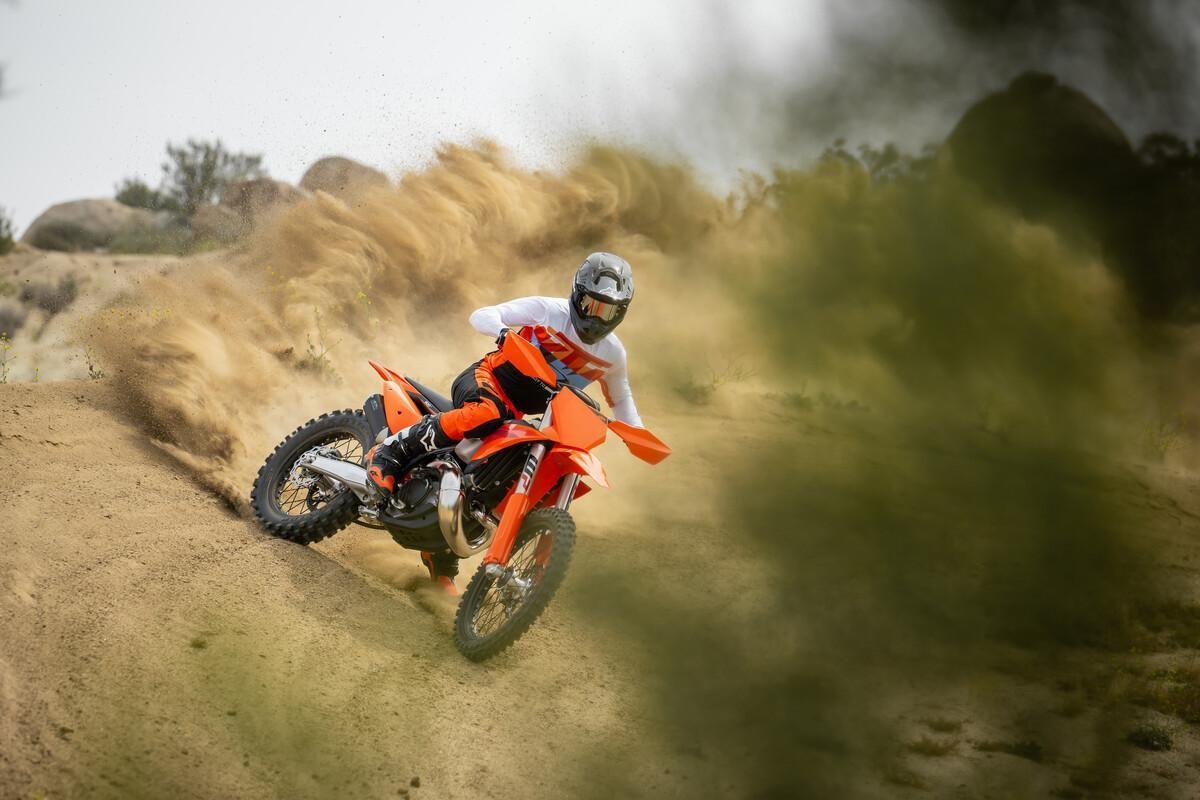
WP XACT Suspension and Electronic Engine Settings
KTM specifies WP XACT suspension for all six models. A closed-cartridge spring fork is used at the front, while a WP XACT shock is fitted at the rear. The factory settings were developed using experience from KTM Factory Racing. The suspension is intended not only to absorb impacts but also to help maintain control throughout an entire race.
What WP XACT Suspension Provides
The closed-cartridge front fork is designed for consistent performance under repeated loads. The rear shock helps maintain tire contact with the ground and supports overall balance as the terrain changes. In cross-country racing, coordinated front and rear suspension performance is important. If one end of the motorcycle responds differently to bumps than the other, controlling the bike on a difficult course becomes more challenging. For this reason, suspension development takes into account not only the characteristics of individual components but also the behavior of the motorcycle as a whole.
KTM’s setup focuses on confident front-wheel response, stable rear-wheel traction, and predictable behavior during long races. Suspension also affects rider comfort and fatigue. On a long course, repeated impacts and vibration increase physical strain, so the chassis’s ability to control wheel movement remains an important factor.
Connectivity Unit Offroad: Engine Adjustment Through an App
An additional feature is available for the four-stroke 2027 KTM XC-F models. These motorcycles are compatible with the optional Connectivity Unit Offroad, offered through the KTM PowerParts catalog. Together with the KTMconnect app, the system allows riders to adjust engine settings according to personal preferences and track conditions.
This can be useful because the same power-delivery characteristics are not always equally suitable for different surfaces. One section may require smoother engine response, while another may benefit from a more aggressive power delivery. The ability to adjust settings helps adapt the motorcycle’s behavior to specific conditions.
It is important to note that the Connectivity Unit Offroad is optional equipment rather than a standard feature on all motorcycles. Before purchasing, buyers should confirm compatibility, available functions, and terms of use for the specific model and market.
Manufacturer’s Warranty
The 2027 KTM XC and XC-F lineup is covered by a one-year Premium Manufacturer’s Warranty. This can be an additional factor when choosing a new motorcycle, although warranty terms should be checked for the specific country. It is especially important to clarify how coverage applies to motorcycles intended exclusively for competition. KTM specifically identifies these models as competition machines, so coverage terms, service requirements, and possible exclusions should be confirmed with an authorized dealer.
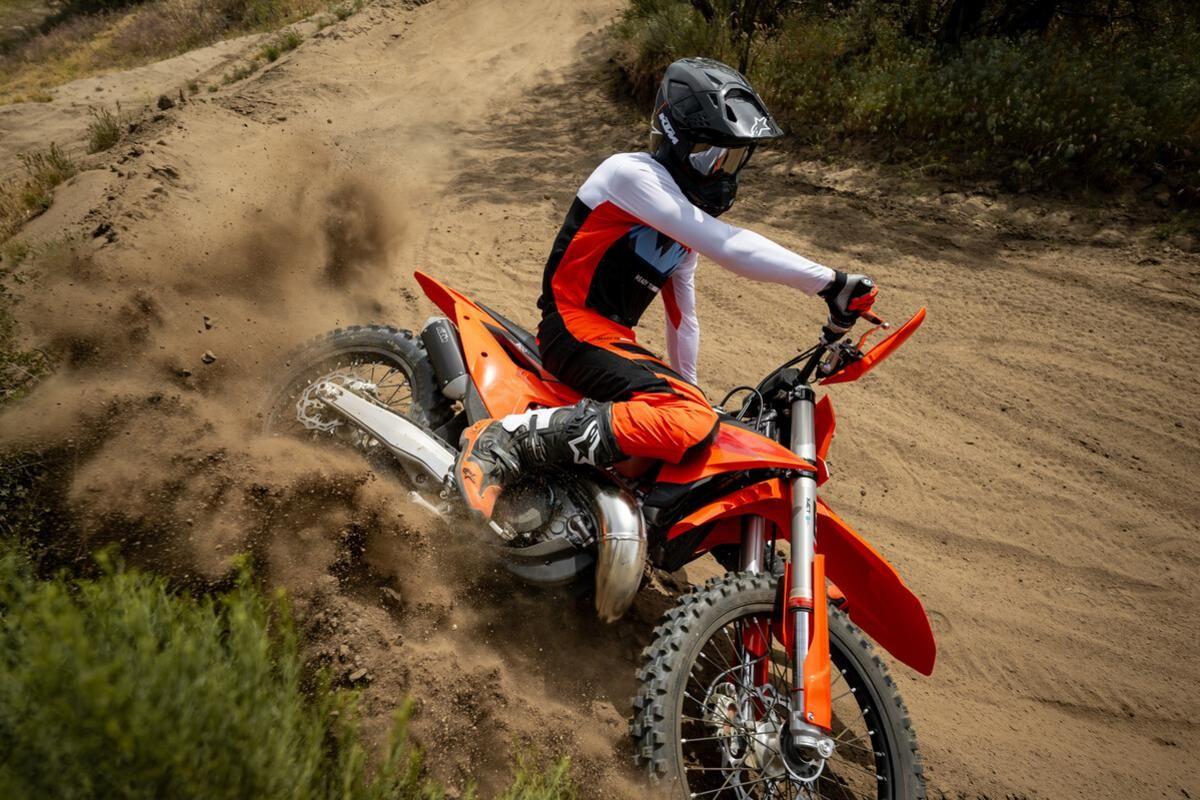
KTM 450 XC-F, 350 XC-F, and 250 XC-F: Three 4-Stroke Models
The four-stroke side of the lineup includes the KTM 450 XC-F, 350 XC-F, and 250 XC-F. All three are designed for cross-country racing but differ in engine displacement and power characteristics.
2027 KTM 450 XC-F — The Most Powerful Model in the Lineup
The KTM 450 XC-F is intended for riders who want a large-displacement engine and a substantial reserve of power. The motorcycle is equipped with a liquid-cooled, single-cylinder, four-stroke engine with a displacement of 449.9 cc. It uses a Keihin electronic engine-management system, fuel injection, and a 6-speed transmission. At the front is a 48 mm WP XACT inverted closed-cartridge fork. At the rear, the motorcycle uses a WP XACT monoshock with a linkage system.
The claimed weight without fuel is approximately 104.8 kg. The main characteristic of the KTM 450 XC-F is the combination of large engine displacement and competition-focused construction. The model is designed for races where strong power, stability on high-speed sections, and consistent chassis performance under prolonged loads are important. When choosing this type of motorcycle, riders should consider not only power but also their skill level, riding conditions, and the requirements of the specific racing discipline.
2027 KTM 350 XC-F — A Balance of Power and Handling
The KTM 350 XC-F sits between the 250 and 450 cc models. The manufacturer positions it as a versatile cross-country option, combining strong acceleration with more moderate displacement than the 450 XC-F. The motorcycle is powered by a liquid-cooled, single-cylinder, four-stroke engine with a displacement of 349.7 cc. Like the other XC-F models, it uses a Keihin engine-management system and a 6-speed transmission.
The motorcycle features a 48 mm WP XACT closed-cartridge front fork and a WP XACT rear monoshock with a linkage system. Its weight without fuel is approximately 104.2 kg. The 350 XC-F stands out for a combination of characteristics that allows it to be considered an alternative both to the larger 450 XC-F and the smaller 250 XC-F. However, the choice between them depends on more than engine displacement: track conditions, rider fitness, and power-delivery preferences also matter.
2027 KTM 250 XC-F — A High-Revving Race Bike
The KTM 250 XC-F is aimed at riders who prefer a smaller-displacement machine. Its engine is designed to operate actively across a wide rpm range, while the motorcycle itself forms part of KTM’s competition lineup for off-road racing. The liquid-cooled, single-cylinder engine has a displacement of 249.9 cc. It uses a Keihin management system, electronic fuel injection, and a 6-speed transmission.
A 48 mm WP XACT closed-cartridge fork is fitted at the front, while the rear uses a WP XACT monoshock. The claimed weight without fuel is approximately 103.4 kg. The model may appeal to riders who value smaller displacement, a sporty engine character, and precise handling. Compared with the 450 XC-F, it differs not only in engine size but also in its overall tuning and balance of characteristics. Like the other four-stroke XC-F models, it is compatible with the optional Connectivity Unit Offroad, expanding engine-adjustment capabilities through KTMconnect.
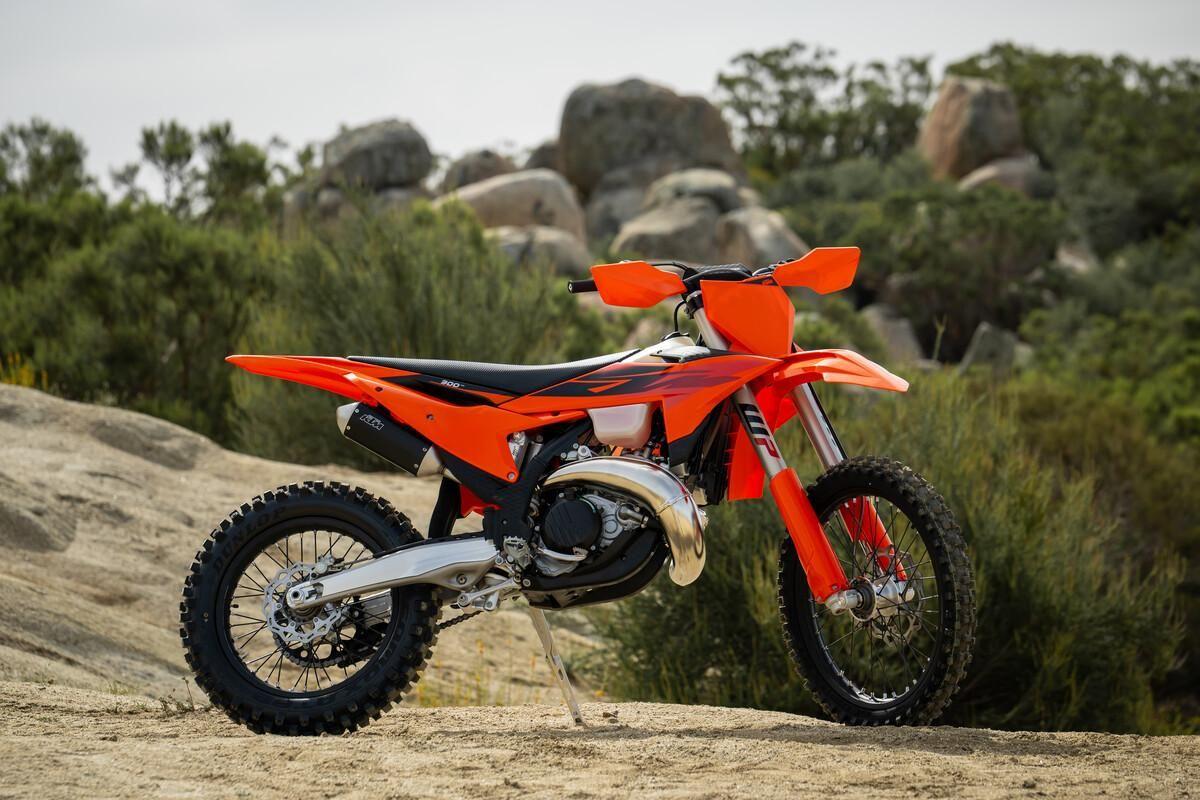
KTM 300 XC, 250 XC, and 125 XC: The 2-Stroke Side of the Lineup
The other three models in KTM’s 2027 lineup use two-stroke engines with electronic fuel injection: the KTM 300 XC, 250 XC, and 125 XC. They differ in displacement, weight, and engine character, making them suitable for different rider preferences and racing tasks. All three models feature 6-speed transmissions and WP XACT suspension.
2027 KTM 300 XC — The Large-Displacement 2-Stroke Model
The KTM 300 XC is equipped with a liquid-cooled, single-cylinder, two-stroke engine with a displacement of 293.2 cc. Engine management is handled by Vitesco electronics, while the fuel system uses electronic injection with a 39 mm throttle body. The motorcycle also features a 6-speed transmission. At the front is a 48 mm WP XACT inverted closed-cartridge fork. At the rear, it uses a WP XACT monoshock with a linkage system.
The claimed weight without fuel is approximately 101.8 kg. This engine differs from the four-stroke units both in operating cycle and power-delivery characteristics. As a result, comparing the 300 XC with the 350 XC-F based only on displacement would be misleading: engine type also has a major effect on how the motorcycle feels and behaves. The KTM 300 XC is designed for cross-country racing and is aimed at riders who want a relatively large-displacement two-stroke engine. However, suitability for a particular rider will also depend on racing regulations and course conditions.
2027 KTM 250 XC — The Mid-Displacement Model
The KTM 250 XC occupies the middle position in the two-stroke lineup. Its liquid-cooled, single-cylinder engine has a displacement of 249 cc. The model uses Vitesco electronic engine management, electronic fuel injection, and a 6-speed transmission. Suspension consists of a 48 mm WP XACT closed-cartridge front fork and a WP XACT rear monoshock.
The claimed weight without fuel is approximately 101.8 kg. In terms of purpose, the 250 XC is a cross-country racing motorcycle that combines a two-stroke engine with a chassis designed for varied off-road terrain. When comparing it with the KTM 300 XC, riders should consider more than the difference in displacement. Engine response, riding habits, competition requirements, and service availability can all influence the final choice.
2027 KTM 125 XC — The Smallest Model in the Lineup
The KTM 125 XC is the smallest-displacement motorcycle among the six 2027 cross-country models. It is powered by a liquid-cooled, single-cylinder, two-stroke engine with a displacement of 124.8 cc. The motorcycle uses Vitesco electronic engine management, electronic fuel injection, and a 6-speed transmission.
At the front is a 48 mm WP XACT closed-cartridge fork. A WP XACT monoshock with a linkage system is fitted at the rear. Weight without fuel is approximately 94.8 kg, making it the lightest of the six models presented by KTM Japan.
Its smaller engine displacement and lower weight distinguish the 125 XC from the larger models. However, this is still a full-fledged competition motorcycle designed for racing rather than general road transportation. Buyers should take into account racing regulations, rider experience, and intended use.
What All Six Models Have in Common
Regardless of the version, the 2027 KTM XC and XC-F lineup shares a common technical foundation:
- chromoly steel frame;
- 6-speed transmission;
- WP XACT suspension with a closed-cartridge front fork;
- updated graphics using In-Mold technology;
- competition-focused construction designed for off-road racing;
- a one-year Premium Manufacturer’s Warranty, subject to the manufacturer’s terms.
The optional Connectivity Unit Offroad is supported by the four-stroke XC-F models and expands engine-tuning options through the KTMconnect app.
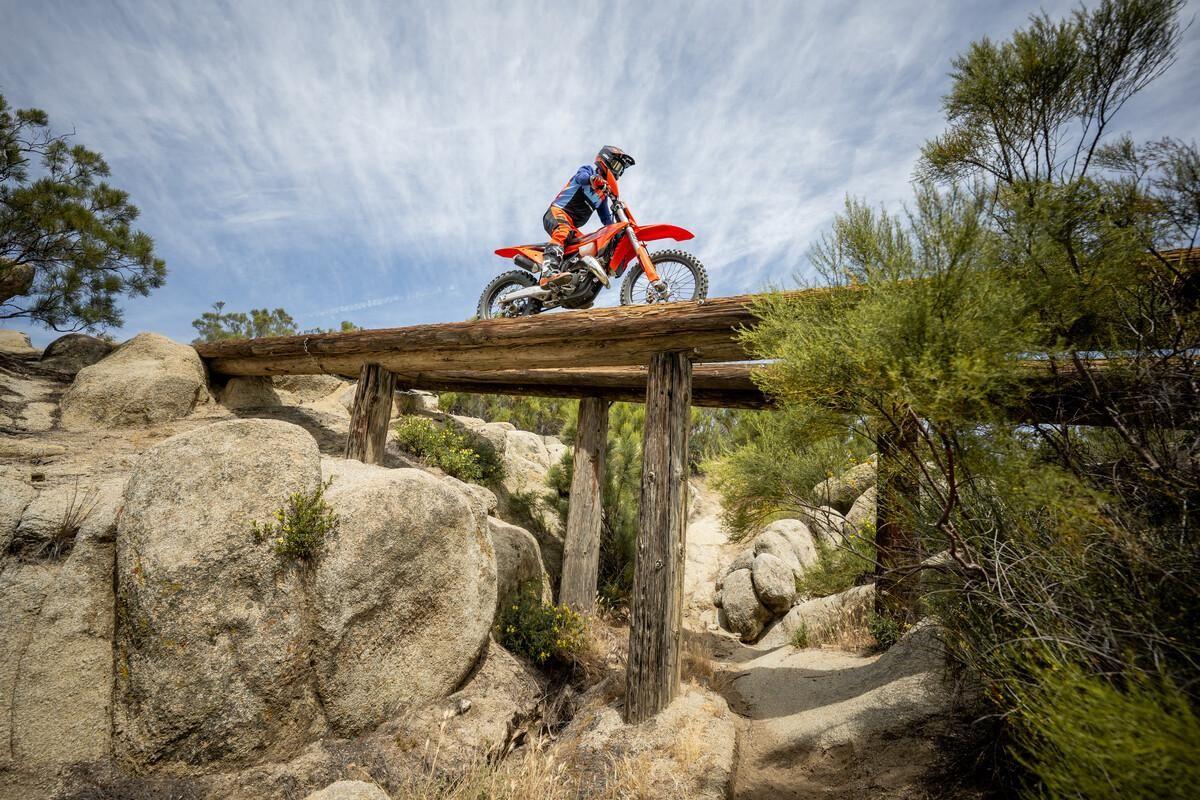
Overall, the main significance of the 2027 update is not the introduction of an entirely new category of motorcycles, but the continued development of KTM’s proven racing platform with refreshed styling, suspension, and additional tuning capabilities for off-road competition.
Photos: pixabay.com