
40 Electronic Road Signs to Be Installed Across Cyprus
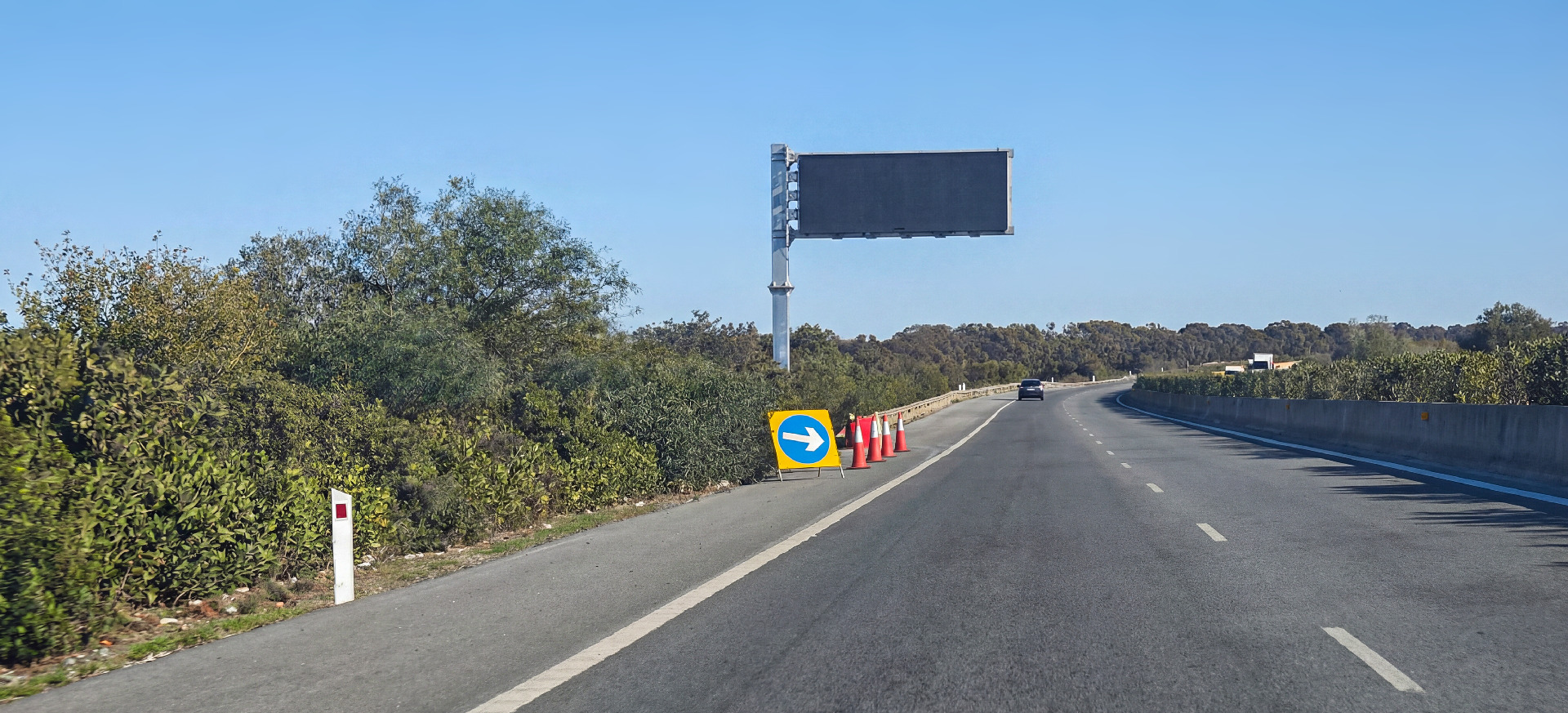
One of the most noticeable stages of digital modernization of the transport system is beginning on the roads of Cyprus. Authorities have started installing 40 electronic information boards that will provide drivers with real-time updates on road conditions. This is not just about new signs, but a full-fledged traffic management system that is already being actively implemented in developed countries.
The project aims to improve safety, reduce congestion, and manage traffic flows more efficiently. According to local authorities, the full launch of all systems is expected within the next six months. The total cost of the project is about €5 million, and it is already considered one of the key steps in developing the island’s intelligent infrastructure.
What will change for drivers in Cyprus
The main innovation is the introduction of “smart” boards that will display up-to-date road information in real time. Unlike traditional road signs, they will be able to instantly change messages depending on the situation.
Drivers will receive alerts about traffic jams, accidents, roadworks, and any emergency situations. This will allow them to make quicker decisions on the road, choose alternative routes, and avoid potentially dangerous areas.
It is especially important that the system operates centrally. All boards are controlled from a single center that analyzes data and promptly transmits information to the screens. This approach has already proven effective in countries with high traffic density and is gradually becoming the standard for modern transport systems.
Where the 40 electronic boards will be installed
The project covers the entire island, but the distribution of equipment is designed based on actual traffic load. Of the 40 electronic panels, half will be installed on highways, and the rest in urban and suburban areas.
On highways, 20 large-sized boards will be installed to ensure information is clearly visible at high speeds. In cities and suburbs, another 20 screens will be installed, smaller in size and adapted to dense urban environments.
The regional distribution is as follows:
- Nicosia — 12 boards,
- Limassol — 10 boards,
- Paphos — 8 boards,
- Larnaca — 7 boards,
- Famagusta (free areas) — 3 boards.
This distribution reflects traffic demand and priority areas where it is especially important for drivers to receive timely information.
Launch timeline and current stage of work
The project is already in an active implementation phase. For the 20 large boards, key construction stages have been completed: foundations have been poured, support structures installed, and equipment mounted. This means they are nearly ready for operation. As for the remaining 20 smaller panels, foundation work has already begun and is expected to be completed by the end of April 2026. After that, the final stage of installation and connection will begin.
All devices have already been tested using generators and temporary power sources. According to specialists, the equipment is fully ready for operation. The main factor currently delaying the launch is connection to the power grid. The system will be introduced gradually: as each location is connected to electricity, the boards will be put into operation immediately. Full deployment of all 40 electronic signs is planned within the next six months.
What is included in the €5 million project
The project is not limited to the installation of electronic boards. It is part of a large-scale program to modernize transport infrastructure and includes several technological solutions. Cyprus roads will be equipped with 20 CCTV-PTZ rotating surveillance cameras capable of monitoring situations dynamically. In addition, 150 stationary cameras with software for monitoring and recording traffic conditions will be installed.
To analyze traffic in real time, 74 traffic flow sensors will be introduced. These will track road congestion and transmit data to the control system. There are also plans to install 106 high-performance roadside Bluetooth readers to help track vehicle movement and traffic speed. An important part of the project is not only the installation of new equipment, but also the upgrade of existing infrastructure and its ongoing maintenance, making the system sustainable and suitable for long-term use.
Thus, Cyprus is gradually transitioning from a traditional model of road management to a modern digital ecosystem. For drivers, this means safer journeys, less stress on the roads, and time savings every day.
A wide selection of cars on the portal DOMCar.