
Sedans That Lose The Least Value
Buyer preferences in recent years have changed significantly. Today, a car is perceived not only as a means of transport that increases travel comfort and eliminates the need to constantly use taxis or buses, but also as an investment capable of preserving savings. Therefore, many people think about how much money they will be able to recover after 5–7 years of use.
It is no secret that immediately after leaving the showroom, a car moves from the category of “new” to “used.” This is associated with an instant loss of 15–20% of its value. However, it is still possible to sell your “iron horse” profitably later if you make the right choice from the start. Today we will talk about which sedans deserve special attention.
Japanese philosophy of reliability and liquidity
Japanese cars are famous for their reliability and for hardly losing value over time. This is clearly visible in the used car market.
Japanese manufacturers have focused on durability and practicality for many years, which is why their sedans are inexpensive to operate and maintain. Japanese cars have reliable engines, gearboxes, and electronics designed for a long service life. Their engineers pay great attention to the quality of materials and assembly.
The availability of spare parts and qualified mechanics specializing in Japanese vehicles also plays an important role. That is why such cars are very popular among drivers. Of course, this does not mean that all Japanese cars are flawless. They also have their drawbacks, but overall they are considered world leaders. And therefore they lose value much more slowly than their competitors.
Hybrid sedans as a new form of price stability
The automotive sector does not stand still. Something new constantly appears. Hybrid models are capturing the attention of car enthusiasts. Many people are actively switching to them. If previously hybrids were purchased by only a few, now almost every second buyer chooses them.
This is not surprising — such cars are economical, environmentally friendly... and all this at a time when gasoline prices continue to rise and environmental requirements are becoming stricter. Take, for example, Toyota Corolla Hybrid. This — is simply a great find! If you drive it for 5 years, you can expect to receive about 62% of the amount you originally paid when reselling it. Why is that? First, the Corolla has an excellent reputation. Second, its hybrid system is very well built: there is almost nothing to break, and it works perfectly even after hundreds of thousands of kilometers.
Another example — Honda Civic Hybrid. It also retains value well: about 61% after 5 years. Drivers like this sedan because it is both quick and economical. Notably, the hybrid system does not make the Civic more complicated to use, but rather —makes it more convenient for everyday driving. So if you are looking for a car that will not strain your budget, a hybrid sedan — is an excellent choice!
Legends proven by time
Hybrids are very popular now, but good old gasoline-powered cars are still “in fashion.” Mainly because they depreciate slowly. Some models can even compete with modern sedans.
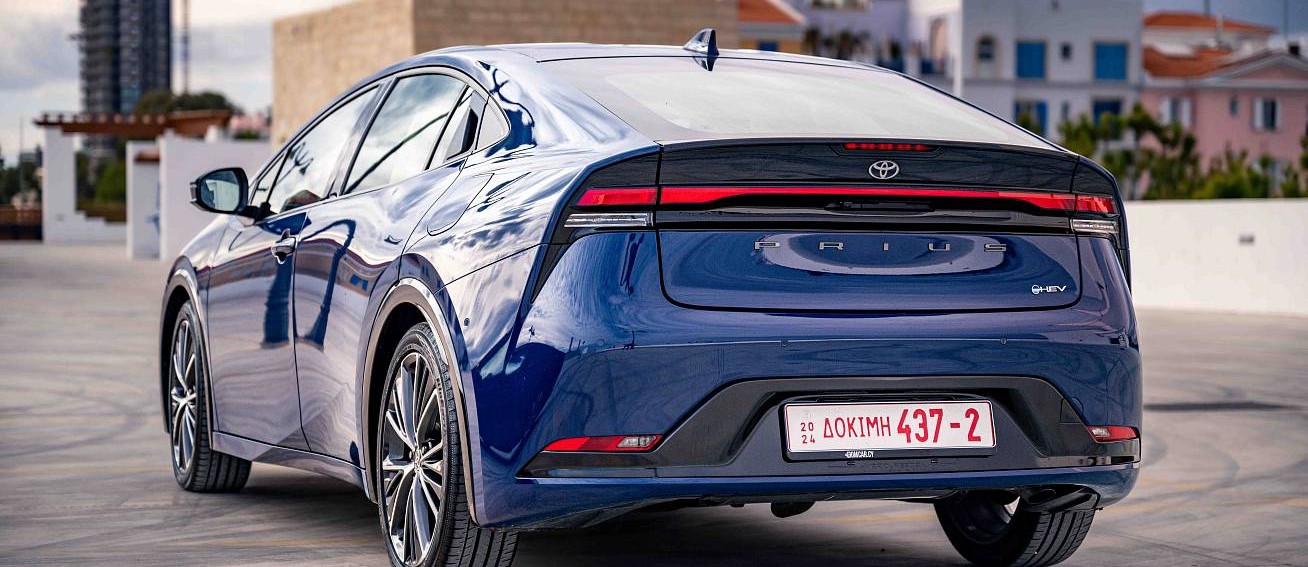
For example, Toyota Prius. It is a symbol of an economical and sensible car. Even if it is many years old, it can still be sold profitably, returning around 60% of the original price. This means that investing money in a Prius is quite safe.
Gasoline-powered Toyota Corolla and Honda Civic are also in high demand. After five years they lose about 42% of their value. This is a very good result for gasoline vehicles. Why is that? Everything is simple: they have straightforward construction, spare parts are easy to obtain, and people trust them. In short, such sedans will definitely not let you down!
Who are these cars suitable for? Those who are looking for a daily driver. If you are considering buying a car, take a closer look at these legends. They definitely will not disappoint!
Mid-range car segment
In the mid-range car segment, the “gold” standard is the Toyota Camry. This sedan has always been known for its comfort and reliability. After five years of use, selling a Camry can bring about 55% of the original price.
Honda Accord can also be included here, as it is comparable to the Camry. After 5 years of use, the owner of such a car can recover approximately 54% of the original price. Other good options include Mazda 3 (around 54%) and Subaru Legacy (around 53%).
Interestingly, Korean brands are also becoming increasingly prominent. The hybrid Hyundai Elantra retains about 52% of its original value after 5 years. This is a result that was unattainable for Korean cars just a few years ago. Improved build quality, growing trust in hybrid technology, and attractive pricing have made the Elantra a serious player in the automotive market.
Premium segment
In the upper price range, slightly different rules apply. Buyers here evaluate a car not only as a means of transport but also as a way to demonstrate wealth and social status. The price immediately includes an image component, which leads to more pronounced depreciation compared to economy segments where the focus is on practicality and reliability.
One of the best options for investment is the Mercedes-Benz S-Class. This is truly a legendary model, and many people are willing to purchase it on the secondary market as second or third owners to touch the dream. More affluent buyers can pay attention to the Porsche Panamera. Here it is not just about a higher price but also improved equipment, the highest levels of comfort, and prestige.
What unites sedans with high residual value
If you look at these cars overall, it becomes clear that high liquidity is not accidental. Such sedans share restrained design that does not become outdated, reliable powertrains, reasonable technology, and broad service infrastructure. They do not require exotic spare parts, are easy to maintain, and suit different categories of drivers.
Choosing such a car is a bet not on emotions but on common sense. And practice shows that this approach most often turns out to be the most profitable in the long term.
A large selection of cars on the portal DOMCar.